
Новые технологии вносят новый импульс в развитие подъёмного такелажа

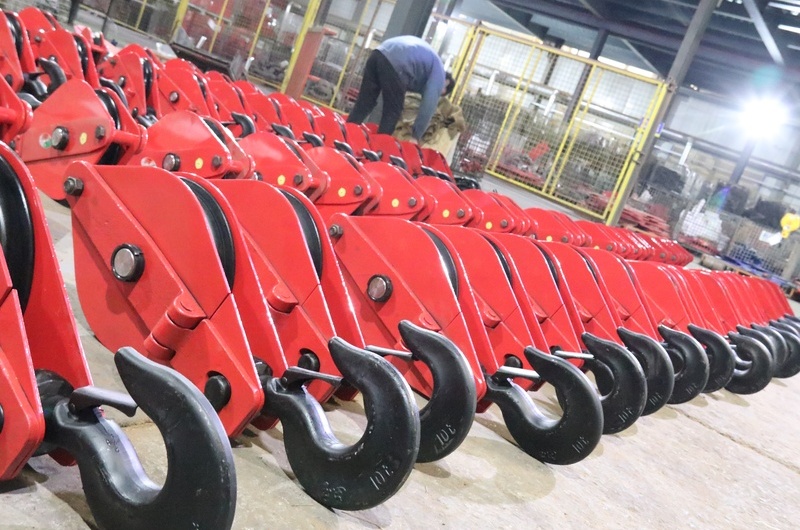
The lifting rigging industry is currently experiencing a wave of technological innovation, with new technologies injecting fresh impetus into its development. These new technologies are not only improving the performance of lifting rigging products but also expanding their application scope.
One of the significant technological advancements is in material science. New high – strength and lightweight materials are being developed and applied in the production of lifting rigging. For example, advanced alloy materials are being used to replace traditional steel materials. These alloys have higher strength – to – weight ratios, which means that the lifting rigging made from them can bear heavier loads while being lighter in weight. This not only reduces the energy consumption during the use of lifting rigging but also makes it more convenient to install and operate. In addition, new composite materials are also emerging, which combine the advantages of different materials to achieve excellent performance in terms of strength, corrosion resistance, and fatigue resistance.
Another important aspect of technological innovation is in the manufacturing process. Advanced manufacturing techniques such as 3D printing are gradually being introduced into the production of lifting rigging. 3D printing allows for the production of complex – shaped components with high precision. This is especially useful for the production of some special – purpose lifting rigging with unique structures. It can reduce the production time and cost, and also enable more customized designs. Moreover, the application of automated production lines in the manufacturing of lifting rigging has greatly improved production efficiency and product quality. Automated equipment can precisely control the manufacturing process, reducing human errors and ensuring the consistency of product quality.
In terms of safety technology, new sensors and monitoring systems are being integrated into lifting rigging. These sensors can continuously monitor parameters such as the load, stress, and temperature of the lifting rigging during operation. Once abnormal conditions are detected, an alarm can be issued in a timely manner, allowing operators to take corresponding measures to avoid accidents. For example, some advanced lifting rigging is equipped with intelligent monitoring systems that can analyze the collected data in real – time and predict potential safety risks, providing important support for safe operation.
The development of new technologies also promotes the integration and intelligence of lifting rigging. Lifting rigging can now be connected to the overall industrial Internet of Things system, enabling remote monitoring and control. This integration makes the operation and management of lifting rigging more efficient and convenient, and also helps to improve the overall productivity of the industry.
In summary, the continuous emergence of new technologies is promoting the upgrading and development of the lifting rigging industry. Manufacturers that actively embrace these new technologies will have a competitive edge in the market.