
Top Tips for Selecting the Right Slings

right_slings
Top Tips for Selecting the Right Slings
Key Factors to Consider When Selecting a Right Slings
-
Load Characteristics: This is the starting point. Consider the total weight, size, shape, and center of gravity of the load. Irregularly shaped items may require a multi-leg sling assembly for stability. -
Lifting Configuration: How will the sling contact the load? The hitch type—whether vertical, choker, or basket—directly affects the sling’s effective Working Load Limit (WLL). -
Environmental Conditions: Exposure to extreme temperature, chemicals, moisture, or UV radiation can degrade certain sling materials. The working environment dictates the most suitable type. -
Load Sensitivity: Is the load finished, polished, or fragile? A sling that might mar a delicate surface requires a softer alternative. -
Pre-Use Inspection: Regardless of the sling type, a thorough visual inspection before each use is non-negotiable. Look for signs of wear, distortion, cracks, or chemical damage.
The Three Main Categories of Industrial Slings
1. Chain Slings
-
Key Advantages: -
High Strength: Withstand severe applications and are resistant to cutting and abrasion. -
Temperature Resistance: Suitable for use in environments like foundries where temperatures exceed the limits of synthetic slings. -
Durability: Long service life when properly maintained and inspected. -
Adaptability: Can be used with various attachments like grab hooks and self-locking hooks for complex lifts.
-
-
Considerations: Heavier than other sling types. Susceptible to damage from sudden shock loads. Requires regular inspection for stretch, wear, and cracks on links. -
Ideal For: Heavy machinery, steel plates, high-temperature loads, and rugged environments.
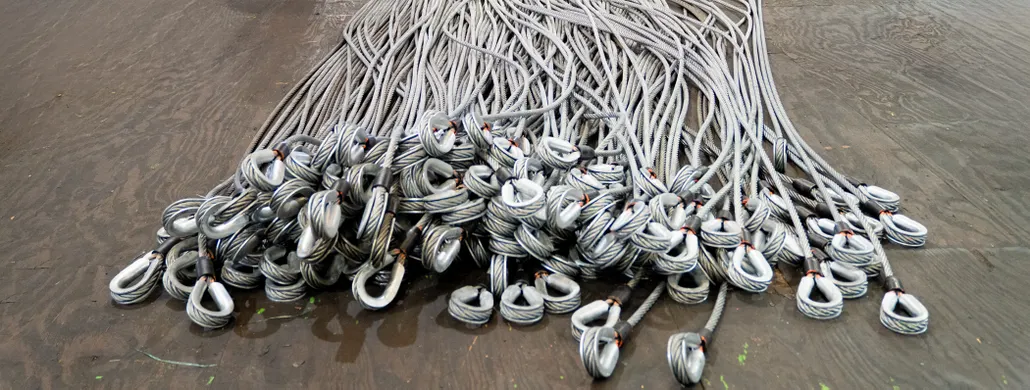
2. Wire Rope Slings
-
Key Advantages: -
High Strength-to-Weight Ratio: Stronger than chain slings of comparable diameter, yet lighter. -
Flexibility: Excellent fatigue resistance for applications involving frequent bending over sheaves. -
Abrasion Resistance: Performs well in rugged conditions.
-
-
Considerations: Prone to damage from kinking, birdcaging, and corrosion if not properly maintained. The strength can be compromised by sharp bends (low D/d ratio). -
Ideal For: Construction, shipping, logging, and general heavy-duty lifting where durability and flexibility are key.
3. Synthetic Slings (Web and Round Slings)
-
Key Advantages: -
Load Protection: Soft and wide surface area prevents damage to polished or fragile surfaces. -
Lightweight & Easy to Handle: Reduces worker fatigue and improves handling efficiency. -
High Flexibility: Conforms easily to the shape of the load.
-
-
Considerations: Susceptible to damage from chemicals, UV light, sharp edges, and high temperatures. Requires careful inspection for cuts, tears, and broken stitches. -
Ideal For: Finished products, glass, machinery, and any application where load finish is a priority.
Comparative Overview: Choosing at a Glance
|
|
|
|
|
|---|---|---|---|
|
|
|
|
|
|
|
|
|
|
|
|
|
|
|
|
|
|
|
|
|
|
|
|
|
|
|
|
|
|
Conclusion: Safety is Paramount
-
Refer to the manufacturer’s certified WLL chart for the specific sling and hitch configuration. -
Train personnel on proper sling selection, use, and inspection techniques. -
Conduct pre-use inspections and immediately remove damaged slings from service.
Key Factors in Sling Selection
1. Load Characteristics
-
Weight: Always verify the load weight matches the sling’s Working Load Limit (WLL) -
Shape & Size: Irregular loads may require multi-leg bridle slings for proper weight distribution -
Center of Gravity: Properly positioned sling legs prevent dangerous load shifts
2. Lifting Configuration
-
Vertical Hitch: Provides full WLL capacity -
Choker Hitch: Reduces capacity by 25-30% due to stress points -
Basket Hitch: Can double capacity when properly configured
3. Environmental Conditions
-
Temperature: Chain slings excel in high-heat environments (up to 400°C) -
Chemical Exposure: Synthetic slings may degrade with certain chemicals -
Abrasion: Wire rope slings offer excellent abrasion resistance
Chain Slings: The Heavy-Duty Solution
Advantages:
-
Highest strength-to-weight ratio among sling types -
Durable against abrasion and impact -
Heat resistant for foundry and high-temperature work -
Adjustable with grab hooks for versatile configurations
Applications:
-
Heavy machinery installation -
Steel plate handling -
Foundry and high-temperature lifting
Wire Rope Slings: The Versatile Performer
Key Benefits:
-
6×19 and 6×36 constructions for different flexibility needs -
Fiber core for increased flexibility -
Independent wire rope core (IWRC) for heavy-duty applications -
End fittings available in various styles (hooks, eyes, ferrules)
Best Uses:
-
Construction site lifting -
Shipbuilding applications -
General rigging where flexibility is required
Synthetic Slings: The Delicate Load Specialist
Why Choose Synthetic:
-
Non-marring surface protects finished materials -
Lightweight for easy handling -
Shock absorbing qualities -
Chemical resistant versions available
Ideal For:
-
Precision machinery -
Glass and fragile material handling -
Finished product movement
Safety First: Proper Sling Inspection
Choosing Your Sling: Quick Reference
|
|
|
|
|
|---|---|---|---|
|
|
|
|
|
|
|
|
|
|
|
|
|
|
|
|
|
|
|
|
|
|
|
|
|
Trust Shenli Rigging for Your Lifting Solutions
According to OSHA’s official lifting sling inspection guide, every two leg chain sling must be inspected for wear, cracks, and elongation before each use to ensure operator safety.
As outlined in ASME B30.9, two leg chain slings should always operate within recommended load angles to prevent overloading and maintain balance.