
Understanding the Two Leg Chain Sling: A Complete Guide for Safe Lifting

What Is a Two Leg Chain Sling?
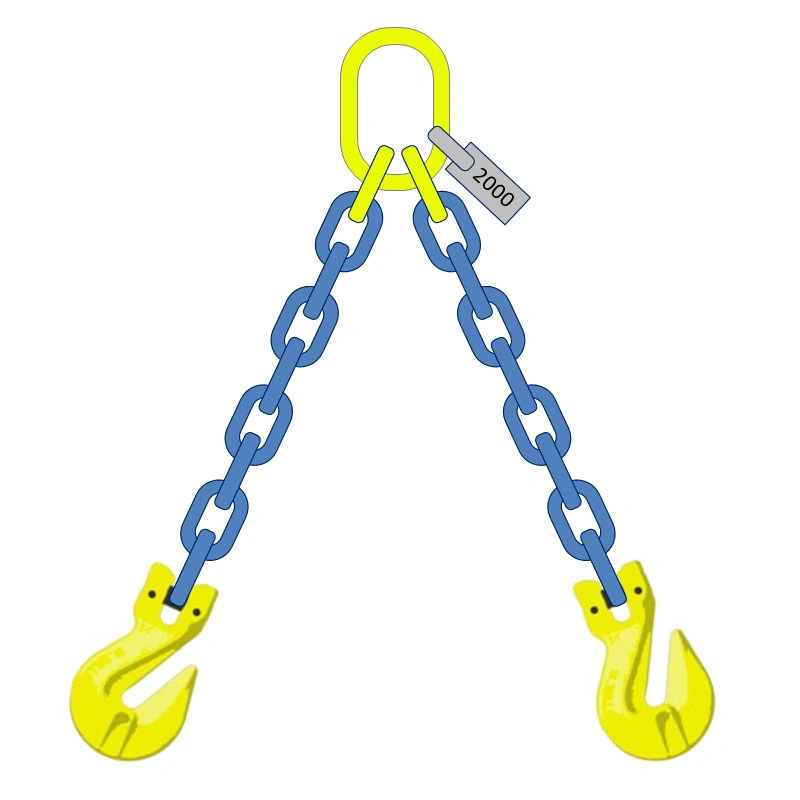
A two leg chain sling is a lifting assembly made of high-strength alloy steel chains connected by a master link and two legs with hooks at the ends. It is designed for lifting, moving, or positioning heavy loads where balance and stability are required. Compared with single-leg slings, a two leg chain sling offers better load control and increased lifting capacity, making it ideal for industrial, construction, and rigging applications.
Main Components of a Two Leg Chain Sling
A typical two leg chain sling includes several key components:
-
Master Link – The top connection point that attaches to the crane or hoist hook.
-
Two Chain Legs – Made of alloy steel, these provide flexibility and strength.
-
End Hooks or Fittings – Attached to the load for lifting; available in clevis, grab, or sling hook types.
-
Connecting Links – Used to assemble components securely.
Each part of the two leg chain sling must be inspected regularly to ensure safety and performance.
Advantages of Using a Two Leg Chain Sling
Using a two leg chain sling provides several benefits:
-
Adjustable Lifting Angles – The two legs allow better load distribution.
-
Durability – Alloy steel chains resist abrasion, corrosion, and high temperatures.
-
Versatility – Suitable for lifting irregular or uneven loads.
-
Safety – Reduced risk of tipping or swinging compared to single-leg slings.
In short, a two leg chain sling is an excellent balance between strength and flexibility.
Load Capacity and Working Angles
The working load limit (WLL) of a two leg chain sling depends on both the chain size and the lifting angle. For example, a 10 mm alloy steel two leg chain sling may handle up to 7.1 tons at a 60° angle, but the capacity decreases as the angle increases. Always refer to the manufacturer’s load chart to ensure you’re operating within safe limits.
Inspection and Maintenance Tips
Regular inspection is critical for any two leg chain sling. Before each use, check for:
-
Bent or cracked links
-
Excessive wear or elongation
-
Damaged hooks or fittings
-
Signs of corrosion or heat damage
A two leg chain sling showing any of these defects should be removed from service immediately. Proper lubrication and storage away from chemicals and moisture will extend its service life.
Applications of Two Leg Chain Slings
You can find chain slings in heavy industries such as:
-
Construction sites
-
Shipyards and ports
-
Steel fabrication plants
-
Warehouses and logistics centers
They are perfect for lifting pipes, beams, machinery, and other large or awkward loads safely and efficiently.
Conclusion
A chain sling is an essential tool in modern lifting operations, combining strength, stability, and adaptability. When properly selected, used, and maintained, it ensures safe and efficient material handling in even the toughest environments.
If you’re looking for high-quality two leg chain slings that meet international safety standards, contact our factory for OEM and ODM options tailored to your lifting needs.
two leg chain sling
How to Choose the Right Two Leg Chain Sling for Your Operation
Selecting the right chain sling is crucial to ensure both safety and efficiency during lifting tasks. The first step is to determine the weight and shape of your load. A heavier or unevenly distributed load requires a stronger chain sling made of high-grade alloy steel. Next, consider the lifting angle—the smaller the angle between the two legs, the higher the stress on each chain leg. Always check the load chart provided by the manufacturer to match the correct two leg chain sling to your working conditions.
You should also decide on the type of end fittings. Common options include grab hooks for precise load control, sling hooks with safety latches for general use, and self-locking hooks for added security. Every chain sling should come with a permanent identification tag showing the working load limit (WLL), chain grade, and manufacturer’s information.
Finally, make sure your two leg chain sling complies with international standards such as EN 818 or ASME B30.9. Investing in certified, high-quality lifting slings not only improves operational efficiency but also protects your workers and equipment from accidents.
Safety Practices When Using a Two Leg Chain Sling
Even the strongest two leg chain sling can become dangerous if used improperly. To ensure safe lifting, always make sure the load is evenly distributed between both chain legs. Uneven tension can cause one leg of the two leg chain sling to overload, leading to premature wear or even failure. Before lifting, confirm that all hooks and attachments are securely locked and that the two leg chain sling is not twisted or tangled.
During operation, avoid sudden jerks or shock loading. The two leg chain sling should lift the load steadily to maintain balance and control. After each lift, inspect the sling for any visible signs of wear, cracks, or deformation. Training your workers on how to properly handle and store a chain sling will greatly extend its service life and enhance overall site safety.
Remember — a two leg chain sling is a precision tool. With correct usage, routine inspection, and proper maintenance, it will continue to provide reliable lifting performance for years.
FAQ About Two Leg Chain Slings
1. How much weight can a two leg chain sling lift?
The capacity of a two leg chain sling depends on the chain grade, diameter, and lifting angle. For example, a Grade 80 10mm two leg chain sling can typically lift around 7 tons at a 60° angle. Always consult the manufacturer’s load chart for accurate working load limits.
2. Can a two leg chain sling be used at any angle?
No. The angle between the two legs affects the sling’s capacity. A smaller angle increases the tension on each leg. For safe use, the two leg chain sling should generally be operated between 45° and 60°.
3. How often should a two leg chain sling be inspected?
A two leg chain sling should be visually inspected before each use and undergo a detailed inspection by a qualified person at least once every 12 months, depending on usage frequency.
4. What’s the difference between a two leg and four leg chain sling?
A two leg chain sling has two lifting legs for moderate loads, providing good stability and balance. A four leg sling offers higher capacity and is better for very large or uneven loads.
5. Can I customize my two leg chain sling?
Yes. Many manufacturers, including us, offer OEM & ODM customization services for two leg chain slings — including chain length, hook type, and lifting capacity to match your specific lifting requirements.
Conclusion: Choose the Right Two Leg Chain Sling for Reliable Lifting
A two leg chain sling is one of the most versatile and dependable lifting tools in industrial operations. It provides excellent load control, durability, and safety — as long as it’s properly chosen, maintained, and inspected. Whether you’re lifting machinery, steel beams, or construction materials, a quality chain sling ensures your work is efficient and secure.
At our factory, we manufacture chain slings using high-strength alloy steel and precision welding technology. Each sling is tested to meet international safety standards and can be tailored to your project’s needs.
👉 Contact us today to get a quotation or custom design for your chain sling — and experience professional-grade lifting solutions built to last.
According to OSHA’s official lifting sling inspection guide, every two leg chain sling must be inspected for wear, cracks, and elongation before each use to ensure operator safety.
As outlined in ASME B30.9, two leg chain slings should always operate within recommended load angles to prevent overloading and maintain balance.