
行业新闻

How Bridle Chain Slings Handle Complex Lifts Safely

how_bridle_chain_slings

how_bridle_chain_slings

How Bridle Chain Slings Handle Complex Lifts Safely​​

​​A Rigger’s Guide for Bridle Chain Slings: Types, Capacity, Angles, and Safe Use by Shenli Rigging​​

Every rigger faces the challenge: an unbalanced, heavy load that a single-leg sling can’t lift without risking instability. For these complex multi-point lifts, ​​bridle chain slings​​ are the engineered solution, providing unmatched stability, control, and on-site safety. Understanding how these multi-leg assemblies distribute load, respond to angles, and manage stress is fundamental to safe rigging practices.
This comprehensive guide from ​​Hebei Shenli Rigging​​ provides an expert overview of bridle chain slings, detailing their components, types, and the critical safety factors that determine their working capacity.
​​Disclaimer:​​ This article is for informational purposes only. It does not replace certified rigging training or a qualified lift plan. Always verify capacities using the manufacturer’s certified load charts and adhere to the latest OSHA/ASME standards before any lift.

What Are Bridle 链条吊索?

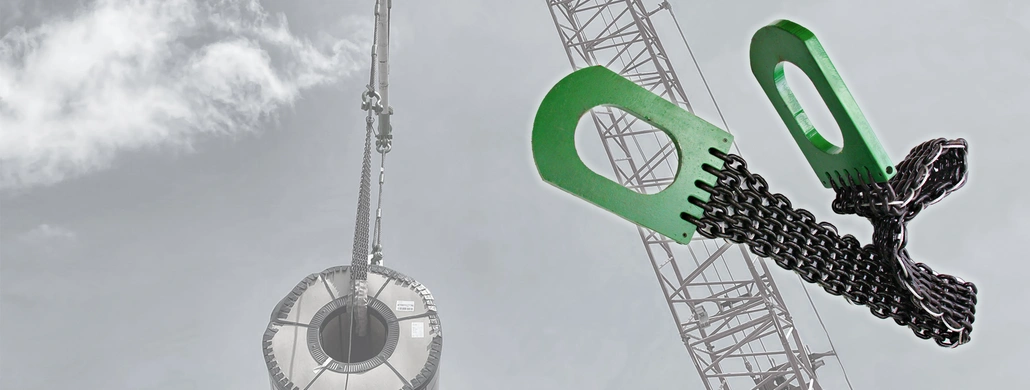
A bridle chain sling is designed for secure and stable lifting of cumbersome loads. It consists of a master link at the top for connection to a crane or hoist, with two or more high-strength alloy steel chains descending from it. Each chain leg is fitted with a hook, shackle, or other end fitting to attach to the load. This configuration is ideal for lifting large objects like machinery, steel plates, or beams, offering superior control compared to a single chain.
The core components of a Shenli bridle chain sling include:
  • ​​Master Link:​​ The central gathering point that connects the legs to the lifting device.
  • ​​Chain Legs:​​ Manufactured from high-grade alloy steel, such as ​​G80, G100, or G120​​, ensuring superior strength and durability.
  • ​​End Fittings:​​ The hardware at the end of each leg (e.g., hooks, shackles) that secure the load. Shenli offers a wide range, including ​​Clevis Sling Hooks​​ and ​​Self-Locking Hooks​​.

工作载荷极限 (WLL)

Every sling must be tagged with its ​​Working Load Limit (WLL)​​, indicating the maximum weight it can safely lift in a straight, vertical pull under ideal conditions. The WLL is calculated by dividing the chain’s Minimum Breaking Strength (MBS) by a design factor—typically 4:1 for chain slings—to incorporate a vital safety margin.
Per ​​OSHA 1910.184​​, if a sling’s WLL tag is missing or illegible, the sling must be removed from service immediately.

Types of Bridle Chain Slings by Leg Count

Bridle slings are categorized by leg count, with each configuration serving specific stability needs.
  • ​​2-Leg Bridle Sling:​​ The most common type, perfect for balanced loads with two lift points, such as I-beams and pipes. It ensures even weight distribution and good stability.
  • ​​3-Leg & 4-Leg Bridle Slings:​​ Used for large, irregular, or rectangular loads requiring multiple points to prevent tipping. It’s crucial to note that per ​​ASME B30.9​cURL Too many subrequests by single Worker invocation. To configure this limit, refer to https://developers.cloudflare.com/workers/wrangler/configuration/#limits.

cURL Too many subrequests by single Worker invocation. To configure this limit, refer to https://developers.cloudflare.com/workers/wrangler/configuration/#limits

cURL Too many subrequests by single Worker invocation. To configure this limit, refer to https://developers.cloudflare.com/workers/wrangler/configuration/#limits.
  • ​cURL Too many subrequests by single Worker invocation. To configure this limit, refer to https://developers.cloudflare.com/workers/wrangler/configuration/#limitscURL Too many subrequests by single Worker invocation. To configure this limit, refer to https://developers.cloudflare.com/workers/wrangler/configuration/#limits.
  • ​cURL Too many subrequests by single Worker invocation. To configure this limit, refer to https://developers.cloudflare.com/workers/wrangler/configuration/#limitscURL Too many subrequests by single Worker invocation. To configure this limit, refer to https://developers.cloudflare.com/workers/wrangler/configuration/#limits.
  • ​cURL Too many subrequests by single Worker invocation. To configure this limit, refer to https://developers.cloudflare.com/workers/wrangler/configuration/#limitscURL Too many subrequests by single Worker invocation. To configure this limit, refer to https://developers.cloudflare.com/workers/wrangler/configuration/#limits.
  • ​cURL Too many subrequests by single Worker invocation. To configure this limit, refer to https://developers.cloudflare.com/workers/wrangler/configuration/#limitscURL Too many subrequests by single Worker invocation. To configure this limit, refer to https://developers.cloudflare.com/workers/wrangler/configuration/#limitscURL Too many subrequests by single Worker invocation. To configure this limit, refer to https://developers.cloudflare.com/workers/wrangler/configuration/#limits​ and ​cURL Too many subrequests by single Worker invocation. To configure this limit, refer to https://developers.cloudflare.com/workers/wrangler/configuration/#limitscURL Too many subrequests by single Worker invocation. To configure this limit, refer to https://developers.cloudflare.com/workers/wrangler/configuration/#limits.

cURL Too many subrequests by single Worker invocation. To configure this limit, refer to https://developers.cloudflare.com/workers/wrangler/configuration/#limits

cURL Too many subrequests by single Worker invocation. To configure this limit, refer to https://developers.cloudflare.com/workers/wrangler/configuration/#limits.

cURL Too many subrequests by single Worker invocation. To configure this limit, refer to https://developers.cloudflare.com/workers/wrangler/configuration/#limits

cURL Too many subrequests by single Worker invocation. To configure this limit, refer to https://developers.cloudflare.com/workers/wrangler/configuration/#limits.
​​Disclaimer:​cURL Too many subrequests by single Worker invocation. To configure this limit, refer to https://developers.cloudflare.com/workers/wrangler/configuration/#limits.
cURL Too many subrequests by single Worker invocation. To configure this limit, refer to https://developers.cloudflare.com/workers/wrangler/configuration/#limits
1.000
cURL Too many subrequests by single Worker invocation. To configure this limit, refer to https://developers.cloudflare.com/workers/wrangler/configuration/#limits
1.155
cURL Too many subrequests by single Worker invocation. To configure this limit, refer to https://developers.cloudflare.com/workers/wrangler/configuration/#limits
1.414
cURL Too many subrequests by single Worker invocation. To configure this limit, refer to https://developers.cloudflare.com/workers/wrangler/configuration/#limits
2.000
​cURL Too many subrequests by single Worker invocation. To configure this limit, refer to https://developers.cloudflare.com/workers/wrangler/configuration/#limitscURL Too many subrequests by single Worker invocation. To configure this limit, refer to https://developers.cloudflare.com/workers/wrangler/configuration/#limitscURL Too many subrequests by single Worker invocation. To configure this limit, refer to https://developers.cloudflare.com/workers/wrangler/configuration/#limits​.

cURL Too many subrequests by single Worker invocation. To configure this limit, refer to https://developers.cloudflare.com/workers/wrangler/configuration/#limits

cURL Too many subrequests by single Worker invocation. To configure this limit, refer to https://developers.cloudflare.com/workers/wrangler/configuration/#limits.
  • ​cURL Too many subrequests by single Worker invocation. To configure this limit, refer to https://developers.cloudflare.com/workers/wrangler/configuration/#limitscURL Too many subrequests by single Worker invocation. To configure this limit, refer to https://developers.cloudflare.com/workers/wrangler/configuration/#limits.
  • ​cURL Too many subrequests by single Worker invocation. To configure this limit, refer to https://developers.cloudflare.com/workers/wrangler/configuration/#limitscURL Too many subrequests by single Worker invocation. To configure this limit, refer to https://developers.cloudflare.com/workers/wrangler/configuration/#limits.
  • ​cURL Too many subrequests by single Worker invocation. To configure this limit, refer to https://developers.cloudflare.com/workers/wrangler/configuration/#limitscURL Too many subrequests by single Worker invocation. To configure this limit, refer to https://developers.cloudflare.com/workers/wrangler/configuration/#limits.

cURL Too many subrequests by single Worker invocation. To configure this limit, refer to https://developers.cloudflare.com/workers/wrangler/configuration/#limits

cURL Too many subrequests by single Worker invocation. To configure this limit, refer to https://developers.cloudflare.com/workers/wrangler/configuration/#limits​ASME B30.9​cURL Too many subrequests by single Worker invocation. To configure this limit, refer to https://developers.cloudflare.com/workers/wrangler/configuration/#limits.

cURL Too many subrequests by single Worker invocation. To configure this limit, refer to https://developers.cloudflare.com/workers/wrangler/configuration/#limits

cURL Too many subrequests by single Worker invocation. To configure this limit, refer to https://developers.cloudflare.com/workers/wrangler/configuration/#limits
  • cURL Too many subrequests by single Worker invocation. To configure this limit, refer to https://developers.cloudflare.com/workers/wrangler/configuration/#limits.
  • cURL Too many subrequests by single Worker invocation. To configure this limit, refer to https://developers.cloudflare.com/workers/wrangler/configuration/#limits.
  • cURL Too many subrequests by single Worker invocation. To configure this limit, refer to https://developers.cloudflare.com/workers/wrangler/configuration/#limits.
  • cURL Too many subrequests by single Worker invocation. To configure this limit, refer to https://developers.cloudflare.com/workers/wrangler/configuration/#limits.
cURL Too many subrequests by single Worker invocation. To configure this limit, refer to https://developers.cloudflare.com/workers/wrangler/configuration/#limits.

cURL Too many subrequests by single Worker invocation. To configure this limit, refer to https://developers.cloudflare.com/workers/wrangler/configuration/#limits

​cURL Too many subrequests by single Worker invocation. To configure this limit, refer to https://developers.cloudflare.com/workers/wrangler/configuration/#limits​
cURL Too many subrequests by single Worker invocation. To configure this limit, refer to https://developers.cloudflare.com/workers/wrangler/configuration/#limits.
​​2. What is the difference between 2-leg, 3-leg, and 4-leg bridle chain slings?​​
2-leg slings are for balanced loads with two points. 3-leg and 4-leg slings provide enhanced stability for large or uneven loads. For capacity calculations, 3 and 4-leg slings are rated as if only two legs are bearing the load, following a conservative safety approach.
​​3. Which end fittings are available for bridle chain slings?​​
Shenli Rigging offers a comprehensive range, including standard sling hooks, grab hooks, foundry hooks, and shackles. The choice depends on the load and environment.
​​4. Do all legs of a bridle sling bear the same load?​​
Not necessarily. Industry practice assumes only two legs support the load unless engineered otherwise. Uneven leg lengths or a shifting center of gravity can cause unbalanced loading.
​​5. What standards govern bridle chain slings?​​
In the United States, they must comply with ​​OSHA 1910.184​​ and ​​ASME B30.9​​, which cover WLL, tagging, inspection, and safe use.

结论

Bridle chain slings are indispensable tools in rigging, but their safety hinges on a rigorous understanding of the forces at play. Capacity is not static; it fluctuates with every change in angle and hitch. By mastering these principles and adhering to strict inspection protocols, riggers can execute every lift with confidence and security.
​​For high-quality, reliable bridle chain slings that meet the highest safety standards, explore the range of G80, G100, and G120 products at Hebei Shenli Rigging.​​ Our expertise, backed by modern manufacturing and a commitment to quality, ensures you have the right tools for the job.

According to OSHA’s official lifting sling inspection guide, every two leg chain sling must be inspected for wear, cracks, and elongation before each use to ensure operator safety.

As outlined in ASME B30.9, two leg chain slings should always operate within recommended load angles to prevent overloading and maintain balance.