
9 Essential Shackle Safety Rules for Professional Rigging Operations

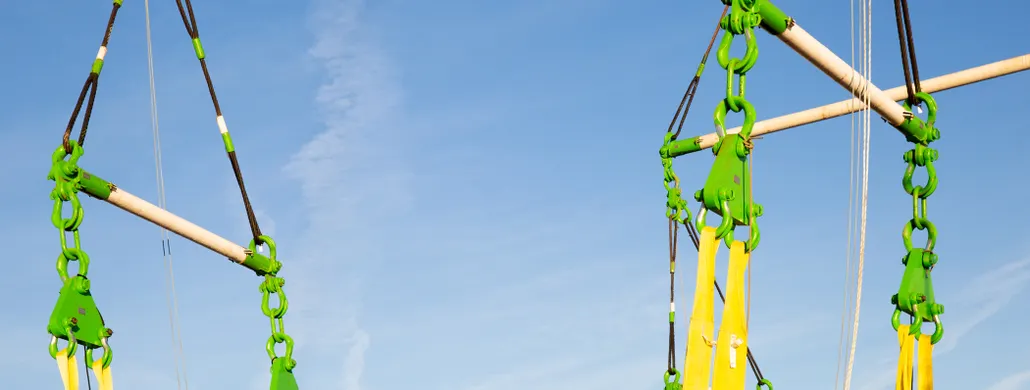
shackle safety
9 Essential Shackle Safety Rules for Professional Rigging Operations
-
Check for Deformation: Look for bending, twisting, or stretching of the bow or pin. An elongated “U” shape often indicates past overloading. -
Identify Surface Defects: Search for cracks, nicks, deep gouges, or excessive corrosion. -
Examine the Pin and Threads: Ensure threads are clean and undamaged. The pin should thread smoothly and seat fully. A stuck or cross-threaded pin is unsafe. -
Verify Markings: The manufacturer’s name and Working Load Limit (WLL) must be legible. If not, the shackle must be removed from service immediately.
Rule 2: Choose the Correct Shackle Safety Type
-
Screw Pin Shackles: Ideal for temporary, non-impactful “pick-and-place” lifts where frequent connection and disconnection are needed. They are convenient but less secure against rotation. -
Bolt-Type Shackles: Recommended for permanent or semi-permanent installations, or where load movement could cause a screw pin to rotate and loosen. The bolt, nut, and cotter pin provide a secure, vibration-resistant connection.
-
Screw Pin Shackles: Thread the pin until the shoulder is finger-tight against the shackle ears. Do not overtighten with tools. For easier post-lift removal, it is sometimes recommended to back the pin off a quarter-turn after tightening. -
Bolt-Type Shackles: The bolt must pass completely through the shackle. The nut should be tightened, and the cotter pin must be installed to prevent the nut from loosening.
-
Avoid Side Loading: Applying a load at an angle to the centerline (side loading) can reduce the effective WLL by 50% or more and is extremely dangerous. -
Use Spacers: When connecting to a narrow point, use spacers to center the load on the pin and prevent the shackle ears from being bent inward.
-
Sling Connections: Always place sling eyes, hooks, or other connectors on the bow of the shackle. cURL Too many subrequests by single Worker invocation. To configure this limit, refer to https://developers.cloudflare.com/workers/wrangler/configuration/#limitscURL Too many subrequests by single Worker invocation. To configure this limit, refer to https://developers.cloudflare.com/workers/wrangler/configuration/#limits. -
cURL Too many subrequests by single Worker invocation. To configure this limit, refer to https://developers.cloudflare.com/workers/wrangler/configuration/#limitscURL Too many subrequests by single Worker invocation. To configure this limit, refer to https://developers.cloudflare.com/workers/wrangler/configuration/#limitscURL Too many subrequests by single Worker invocation. To configure this limit, refer to https://developers.cloudflare.com/workers/wrangler/configuration/#limitscURL Too many subrequests by single Worker invocation. To configure this limit, refer to https://developers.cloudflare.com/workers/wrangler/configuration/#limits.
-
cURL Too many subrequests by single Worker invocation. To configure this limit, refer to https://developers.cloudflare.com/workers/wrangler/configuration/#limitscURL Too many subrequests by single Worker invocation. To configure this limit, refer to https://developers.cloudflare.com/workers/wrangler/configuration/#limits. -
cURL Too many subrequests by single Worker invocation. To configure this limit, refer to https://developers.cloudflare.com/workers/wrangler/configuration/#limitscURL Too many subrequests by single Worker invocation. To configure this limit, refer to https://developers.cloudflare.com/workers/wrangler/configuration/#limits.
-
cURL Too many subrequests by single Worker invocation. To configure this limit, refer to https://developers.cloudflare.com/workers/wrangler/configuration/#limitscURL Too many subrequests by single Worker invocation. To configure this limit, refer to https://developers.cloudflare.com/workers/wrangler/configuration/#limits. -
cURL Too many subrequests by single Worker invocation. To configure this limit, refer to https://developers.cloudflare.com/workers/wrangler/configuration/#limitscURL Too many subrequests by single Worker invocation. To configure this limit, refer to https://developers.cloudflare.com/workers/wrangler/configuration/#limits.
-
cURL Too many subrequests by single Worker invocation. To configure this limit, refer to https://developers.cloudflare.com/workers/wrangler/configuration/#limitscURL Too many subrequests by single Worker invocation. To configure this limit, refer to https://developers.cloudflare.com/workers/wrangler/configuration/#limits -
cURL Too many subrequests by single Worker invocation. To configure this limit, refer to https://developers.cloudflare.com/workers/wrangler/configuration/#limitscURL Too many subrequests by single Worker invocation. To configure this limit, refer to https://developers.cloudflare.com/workers/wrangler/configuration/#limits -
cURL Too many subrequests by single Worker invocation. To configure this limit, refer to https://developers.cloudflare.com/workers/wrangler/configuration/#limitscURL Too many subrequests by single Worker invocation. To configure this limit, refer to https://developers.cloudflare.com/workers/wrangler/configuration/#limits
-
cURL Too many subrequests by single Worker invocation. To configure this limit, refer to https://developers.cloudflare.com/workers/wrangler/configuration/#limits -
cURL Too many subrequests by single Worker invocation. To configure this limit, refer to https://developers.cloudflare.com/workers/wrangler/configuration/#limits -
cURL Too many subrequests by single Worker invocation. To configure this limit, refer to https://developers.cloudflare.com/workers/wrangler/configuration/#limits
According to OSHA’s official lifting sling inspection guide, every two leg chain sling must be inspected for wear, cracks, and elongation before each use to ensure operator safety.
As outlined in ASME B30.9, two leg chain slings should always operate within recommended load angles to prevent overloading and maintain balance.