
Lifting Slings for Construction: Best Options for Heavy Loads

Introduction: When Construction Meets Gravity
In construction, you get two kinds of “heavy”:
1️⃣ The kind you flex about at the gym
2️⃣ The kind that makes a crane cry
And for the second one, you need serious Lifting Slings — reliable, strong, and ready to handle loads that would flatten a forklift’s ego.
Whether you’re hoisting steel beams, concrete blocks, or machinery that weighs more than your entire team combined, the right lifting sling isn’t optional… it’s survival.
Today, we dive into the best lifting sling options for heavy loads in construction — explained simply, professionally, and with a little personality.
Why Choosing the Right Lifting Sling Matters
A bad sling choice is like using a shoelace to tow a truck — technically possible but definitely stupid.
The right lifting sling ensures:
-
✔ Safe load handling
-
✔ Higher lifting efficiency
-
✔ Longer equipment lifespan
-
✔ Fewer “uh-oh” moments on site
Because let’s be honest: nobody wants to fill out incident reports.
1. Wire Rope Slings — The “Old School but Unbreakable” Option
Wire rope slings are basically the tough guys of construction lifting. They:
-
Handle abrasive surfaces
-
Resist heat
-
Survive rough environments
Perfect for:
-
Steel beams
-
Concrete structures
-
Harsh industrial sites
Best Features:
-
🔥 Great heat resistance
-
🪵 Durable under crushing loads
-
🛠️ Affordable for repeated heavy use
If you need slings that act like they drink diesel for breakfast, go wire rope.
High-authority reference:
OSHA wire rope guidelines → https://www.osha.gov/rigger
2. Synthetic Web Slings — Lightweight but Surprisingly Strong
Not everything strong has to look bulky.
Just like your coworker who looks skinny but lifts like a forklift.
Synthetic web slings offer:
-
🪶 Lightweight handling
-
💧 Water resistance
-
❌ No scratching on sensitive surfaces
Best For:
-
Glass panels
-
Painted parts
-
Machinery with delicate finishes
BUT avoid:
-
Sharp edges
-
High heat
-
Abrasive surfaces
High-authority reference:
ASME B30.9 Sling Standards → https://www.asme.org/codes-standards/find-codes-standards/b30-9-slings
3. Round Slings — The Smooth Operator
Round slings are like the “premium experience” of lifting gear. They’re soft, flexible, and surprisingly strong.
Advantages:
-
💪 Very high lifting capacity
-
🔄 Great flexibility
-
🥼 Excellent for choker hitches
Ideal for:
-
Irregular loads
-
Heavy machinery
-
Any job requiring multiple lifting angles
These look gentle but can lift like a beast — honestly, they’re underrated heroes.
High-authority reference:
Crosby Rigging Guide → https://assets.crosbygroup.com/Crosby-Rigging-Application-Guide.pdf
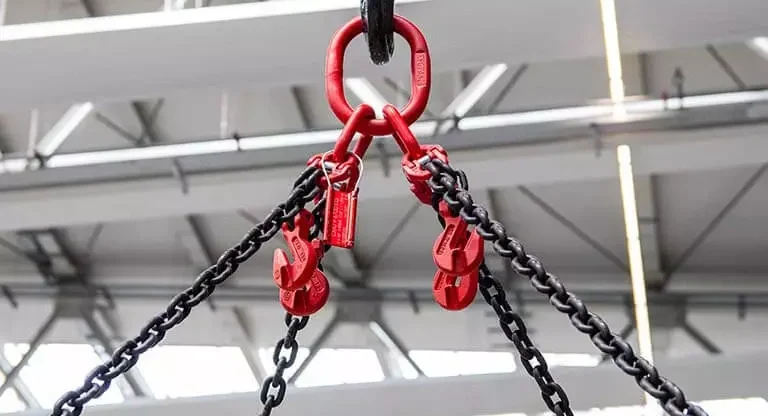
4. Chain Slings — The King of Heavy Loads
If your load is ridiculously heavy, scorching hot, or shaped like a nightmare…
You want chain slings. Period.
Features:
-
🔥 Excellent heat tolerance
-
🔗 Multiple leg configurations
-
💣 Maximum working load limit
-
🛠️ Withstand sharp edges
Perfect for:
-
Steel bundles
-
Construction machinery
-
Foundry work
-
High-temperature environments
When the job screams “danger,” chain slings calmly reply, “I’ve got this.”
Explore options here → Chain Slings
5. What About Shackles & Rigging Hardware?
No sling works alone — you need reliable hardware.
And that means shackles, hooks, and connectors that won’t bail on you mid-lift.
Key points:
-
✔ Use alloy steel shackles
-
✔ Match WLL with your sling
-
✔ Avoid mismatched connectors
-
✔ Inspect before every lift
This is lifting, not LEGO — parts MUST fit properly.
Best Options by Load Type
For Very Heavy Loads (25 tons+)
-
Grade 100 chain slings
-
Wire rope slings
-
Multi-leg assemblies
For Delicate but Heavy Loads
-
Duplex web slings
-
Round slings
For Rough-Surface Loads
-
Wire rope
-
Chain slings
For Construction Sites with Mixed Materials
Use a combination kit of:
✔ Chain slings
✔ Web slings
✔ Round slings
✔ Alloy shackles
Safety Tips Nobody Tells You (But Should)
-
❌ Don’t guess WLL — check the tag
-
❌ Don’t drag slings on the ground
-
❌ Don’t lift over people (seriously)
-
✔ Replace damaged slings immediately
-
✔ Store synthetic slings away from sunlight
-
✔ Keep chain slings lubricated
Construction is dangerous enough — don’t let a $30 mistake cause a $300,000 problem.
Conclusion: Pick the Sling That Fits the Job
The best lifting sling is NOT the most expensive
— it’s the one that matches your load, environment, and lifting method.
Whether you’re using:
-
Chain slings
-
Wire rope
-
Round slings
Make sure the gear is strong, certified, and maintained like your business depends on it — because it does.
🎥 Watch More Rigging Videos
YouTube (Shenli Rigging) → https://www.youtube.com/@shenlirigging-f1f/shorts