
Lifting Chain Slings: How to Select the Right Configuration for Your Project

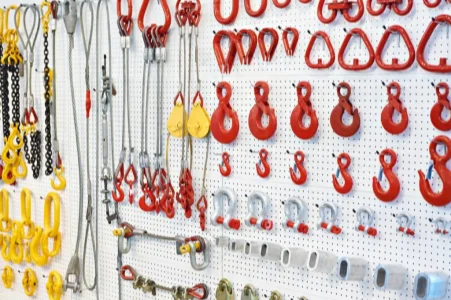
When it comes to industrial lifting, construction hoisting, or moving something so heavy that even forklifts whisper, “Bro… really?”, nothing beats the power and durability of Lifting Chain Slings from https://riggingwholesale.com/. They’re strong, reliable, customizable, and built to handle the kind of loads that webbing slings simply side-eye and walk away from.
But here’s the catch—choosing the right configuration matters. A wrong pick isn’t just inefficient; it can be unsafe, expensive, and downright chaotic. So today, let’s dive into how to choose the perfect Chain Sling for your project… without turning it into a 200-page engineering thesis.
What Are Lifting Chain Slings? (Quick & Fun Overview)
If you’re new to lifting gear, think of Lifting Chain Slings (https://riggingwholesale.com/) as the superheroes of the rigging world. Crafted from high-strength alloy steel, these slings are designed for brutal workloads, harsh environments, extreme temperatures, and the occasional “we didn’t plan for this” moment on job sites.
A typical chain sling system includes:
-
Master link / large ring
-
Intermediate / coupling links
-
Alloy chain
-
End fittings like hooks, clamps, or eye grabs
In short: strong, adjustable, durable, and ready for punishment.
Even Wikipedia says alloy chain slings are widely used in heavy industries—yup, they’re that legit:
https://en.wikipedia.org/wiki/Sling_(rigging)
Why Chain Slings Instead of Other Slings?
Before we choose configurations, here’s why pros prefer chain slings:
✔ Heat Resistance
They can handle heat where synthetic slings simply melt into regret.
✔ Adjustability
Shorten legs, add hooks, change angles—chain slings play by your rules.
✔ Durability
Alloy steel doesn’t mind rough surfaces, sharp edges, or abrasive loads.
✔ Upgradable & Repairable
Damaged chain links? Replaceable.
Damaged webbing? Goodbye.
If you’re working in construction, mining, steel mills, shipyards, or anywhere heavy loads live, Chain Rigging Equipment (https://riggingwholesale.com/) is your go-to.
How to Select the Right Chain Sling Configuration
Now let’s talk about the fun part—picking the setup that won’t betray you mid-lift.
1. Determine Your Load Weight
Simple rule:
👉 Know your load before you choose your sling.
Check reference guides like this lifting capacity chart:
https://en.wikipedia.org/wiki/Working_load_limit
If your load is 5 tons, don’t flirt with a 3-ton sling. Your safety officer will not find that funny.
2. Choose the Number of Legs
This is where things get interesting. The number of legs affects stability, balance, and load capacity.
🔗 Single-Leg Chain Sling
Best for straight-line lifting.
Reliable, simple, no drama.
🔗 Double-Leg (2-Leg) Chain Sling
Great for loads that need lateral stability.
Perfect for lifting bulky but not-too-irregular objects.
🔗 Triple-Leg (3-Leg)
More balance, better load distribution, fewer surprises.
🔗 Quad-Leg (4-Leg)
For the “big boys.”
Heavy machinery, steel structures, containers, etc.
For multi-leg slings, always consider the angle factor. The more open the angle, the less capacity each leg has.
3. Decide Your End Fittings
Hooks aren’t just hooks. They shape your entire lifting approach.
Common options:
-
Grab hooks – shorten chain length
-
Sling hooks – general lifting
-
Self-locking hooks – safest option
-
Foundry hooks – deep throats for large loads
Make sure fittings match your load type and attachment points.
When in doubt, choose the one that makes your safety manager smile.
4. Pick the Right Chain Grade
The most popular industry standard is Grade 80 and Grade 100 alloy chain.
Grade 100 provides:
✔ Higher working load limit
✔ Greater strength
✔ Better durability
Your choice depends on whether your project prefers “safe” or “extra safe.”
5. Environmental Conditions
Ask yourself:
-
Hot environment?
-
Sharp edges?
-
Abrasive surfaces?
-
Heavy vibration?
Chain Slings (https://riggingwholesale.com/) excel in challenging environments, but choosing the right thickness and grade ensures long service life.
6. Do You Need a Customized Sling?
Sometimes your project is… let’s say… “special.”
Odd-shaped machinery
Irregular steel structures
Oversized loads
Loads with weird lifting points
In these cases, custom Lifting Chain Sling Assemblies (https://riggingwholesale.com/) are your best bet.
You get:
-
Custom leg lengths
-
Different hook combinations
-
Precise angles
-
Special attachments
When the load is weird, a custom sling is the hero.
Safety Tips (Because We Love Keeping You Alive)
-
Inspect before every use
-
Don’t exceed WLL
-
Avoid sudden jerks
-
Protect your chain from chemical corrosion
-
Replace damaged links—don’t “pretend it’s fine”
For detailed standards, ASME has all the nerdy details:
https://www.asme.org/
Conclusion: Choose Smart, Lift Safe
Choosing the right Lifting Chain Sling (https://riggingwholesale.com/) configuration doesn’t have to be complicated.
Just remember:
-
Know your load
-
Pick the right number of legs
-
Choose the correct hook
-
Match your chain grade
-
Consider your environment
-
Customize when needed
Do this, and your lifting job goes from “risky business” to “smooth like butter.”