
China Cargo Net Manufacturer: Complete Sourcing Guide to Wire Cargo Nets & Industrial Suppliers


When international B2B buyers search for a reliable China cargo net manufacturer, they’re seeking suppliers who combine competitive manufacturing costs with proven quality standards, comprehensive certification compliance, and consistent delivery performance that protects their supply chain integrity. Whether you’re evaluating a China cargo net supplier for first-time procurement, researching China cargo net specifications for specific maritime, logistics, or industrial applications, or comparing China wire cargo net manufacturers for heavy-duty securing solutions, understanding China’s manufacturing landscape, quality verification procedures, supplier evaluation criteria, and sourcing best practices ensures successful partnerships that deliver value over long-term business relationships.
This comprehensive guide from Shenli Ringing — a specialized China cargo net manufacturer producing webbing cargo nets, wire rope cargo nets, industrial hooks, and rigging chains for global B2B customers — explains what distinguishes quality Chinese manufacturers from commodity suppliers, covers product specifications and applications, provides supplier evaluation frameworks, and offers practical guidance on establishing reliable sourcing relationships with Chinese cargo net producers.
Why China for Cargo Net Manufacturing?
China’s position as the dominant global source for cargo nets, rigging equipment, and industrial securing systems reflects several structural advantages that benefit international buyers.
Manufacturing Scale and Infrastructure
Specialized production clusters: Coastal provinces like Jiangsu, Zhejiang, and Shandong host concentrated manufacturing zones dedicated to rigging equipment, cargo securing systems, and industrial textiles. This geographic concentration creates deep supply chains for raw materials (webbing, wire rope, alloy steel for fittings), specialized machinery, and skilled labor pools.
Raw material access: Domestic production of polyester fiber, nylon, polypropylene, and wire rope provides Chinese manufacturers with cost-competitive material sourcing and supply security unavailable to manufacturers in higher-cost regions.
Production capacity: Large-scale facilities can fulfill container-load orders with short lead times — critical for distributors, importers, and project-based buyers managing inventory and delivery schedules.
Cost Competitiveness
China cargo net manufacturers typically offer 30-50% cost advantages vs. Western manufacturers for equivalent quality specifications. This cost advantage reflects:
- Labor cost differentials for skilled manufacturing operations
- Economies of scale from high-volume production
- Efficient supply chain integration
- Competitive raw material pricing through domestic sourcing
Critical distinction: Cost advantages apply when comparing equivalent quality levels. Ultra-low pricing often indicates substandard materials, inadequate testing, or non-compliant manufacturing — creating safety risks and potential liability that outweigh initial savings.
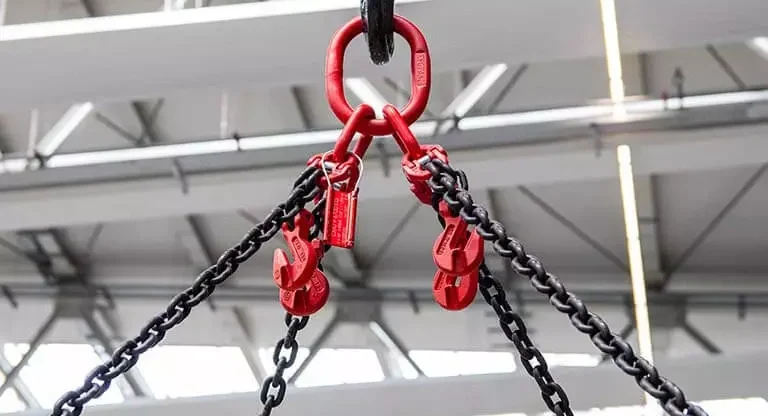
Lifting Slings
Technical Capability and Export Experience
Leading China cargo net supplier operations have invested in:
- Modern weaving and fabrication equipment for consistent webbing quality
- Wire rope manufacturing technology matching international standards
- Load testing equipment for certification compliance
- Quality management systems (ISO 9001, ISO 9001:2015)
- English-language technical capability for international communication
- Efficient export logistics and documentation systems
Regulatory Familiarity
Established Chinese manufacturers serving global markets understand:
- CE marking requirements for European markets
- EN standards for cargo securing and lifting equipment
- ASTM specifications for North American markets
- AS/NZS standards for Australia and New Zealand
- IMO (International Maritime Organization) cargo securing requirements
- Various industry-specific certifications and testing protocols
Types of Cargo Nets from China Manufacturers
China cargo net manufacturer operations produce diverse configurations serving different securing and lifting applications.
Webbing Cargo Nets (Polyester/Nylon)
Construction: Heavy-duty woven webbing (typically polyester or nylon) configured in knotted or knotless net patterns with reinforced borders and corner fittings.
Common sizes: 2×3m, 3×4m, 4×6m, 5×7m (custom sizes available)
Webbing specifications: 50mm width typical; breaking strength 2,000-8,000 kg per 50mm width depending on grade
Mesh size: 50mm, 100mm, 150mm (smaller mesh prevents smaller items from falling through)
Border construction: Doubled or tripled webbing thickness with corner reinforcement patches
Fittings: Forged steel hooks, D-rings, or carabiners at corners and intermediate attachment points
Applications:
- Container cargo securing (ISO container applications)
- Truck and trailer load securing
- Pallet cargo protection (air freight, maritime)
- Construction site debris containment
- Military and defense logistics
Advantages: Lightweight, flexible, UV-resistant (polyester), lower cost than wire rope
Limitations: Lower cut resistance than wire rope, finite UV life (requires periodic replacement)
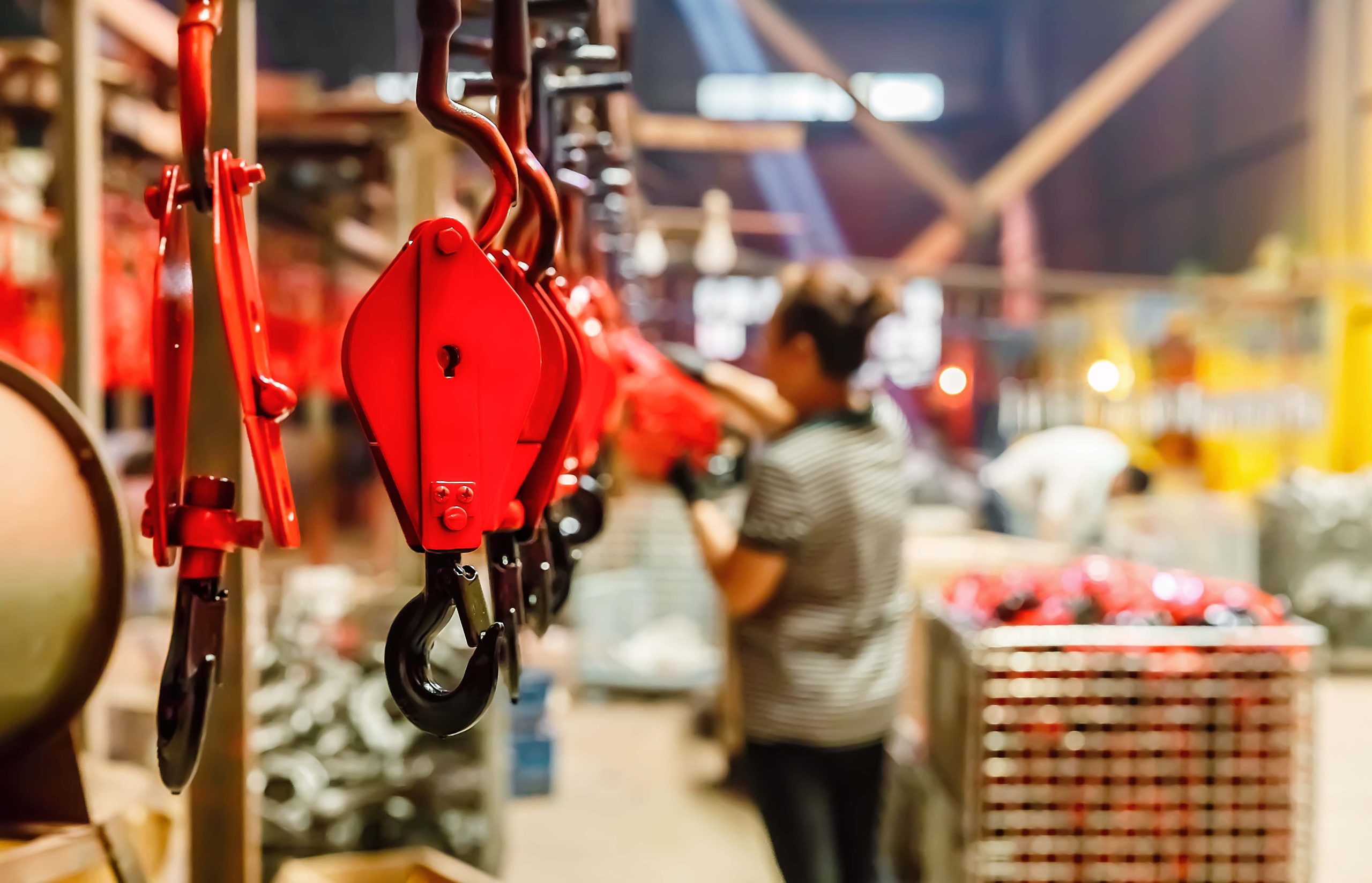
rigging wholesale
Wire Rope Cargo Nets
Construction: Galvanized or stainless steel wire rope woven or configured in net pattern with wire rope borders and steel fittings.
Wire rope diameter: 4mm, 6mm, 8mm typical (heavier applications use larger diameter)
Mesh configuration: Diamond pattern or square grid depending on application requirements
Border construction: Heavy wire rope (typically 2× mesh rope diameter) with thimbles and clamps at corners
Fittings: Forged steel hooks, shackles, or master rings at attachment points
Applications:
- Heavy industrial cargo securing
- Ship deck cargo (break-bulk vessels, general cargo ships)
- Offshore oil and gas platform supply
- Mining and extraction equipment securing
- Construction equipment transport
- Military heavy equipment logistics
Advantages: Superior cut resistance, abrasion resistance, unlimited outdoor life, handles heavy concentrated loads
Limitations: Higher weight than webbing, higher cost, less flexible than webbing nets
Combination Nets (Webbing Border with Wire Mesh)
Construction: Wire rope or chain mesh interior with heavy-duty webbing border for combining wire rope strength with webbing handling characteristics.
Applications: Specialized cargo where interior requires cut resistance but perimeter benefits from webbing flexibility.
Custom Configurations
Quality China cargo net supplier operations offer customization:
- Non-standard dimensions for unique cargo geometries
- Special mesh sizes for specific item securing
- Integrated pockets or compartments for specialized loads
- Color-coded webbing for inventory management
- Custom fitting types and placement for specific equipment

Critical Quality Factors in Chinese Cargo Net Manufacturing
Not all China cargo net manufacturers deliver equivalent quality. These factors separate professional-grade suppliers from commodity producers.
Material Specifications
Polyester webbing (most common for webbing nets):
- High tensile strength (2,000-8,000 kg per 50mm width)
- Excellent UV resistance (critical for maritime and outdoor storage)
- Low stretch characteristics (maintains cargo securing tension)
- Chemical resistance to oils and industrial chemicals
- Temperature range: -40°C to +100°C
Nylon webbing:
- Higher elasticity than polyester (absorbs shock loads)
- Lower UV resistance (degrades faster in sun exposure)
- Superior abrasion resistance
- Best for: Dynamic loading applications, indoor use
Wire rope (for wire cargo nets):
- Galvanized steel (standard — adequate corrosion resistance)
- Stainless steel 304/316 (marine, chemical environments — premium pricing)
- Construction: 7×7 or 7×19 (number of strands × wires per strand)
- Breaking strength certification essential
Quality verification:
- Request material test certificates from webbing/wire rope suppliers
- Verify breaking strength claims through independent testing if stakes are high
- Check UV resistance ratings for polyester (particularly for long outdoor exposure)
Net Construction Quality
Knotted vs. knotless webbing nets:
Knotted construction: Traditional method using reef knots or square knots at webbing intersections. Lower cost, adequate for general cargo, but knots create stress concentration points.
Knotless (woven) construction: Advanced technique where webbing strands are woven together without knots. Higher strength-to-weight ratio, more uniform load distribution, longer service life. Premium pricing justified for critical applications.
Wire rope net construction:
- Woven nets: Wire strands woven together at intersections
- Clamped nets: Wire ropes crossed and secured with metal clamps at intersections
- Welded mesh: Wire rope or rod welded at intersections (highest strength, least flexibility)
Border reinforcement quality indicators:
- Reinforced borders with 2× or 3× webbing thickness
- Corner patches distributing stress across larger area
- Quality stitching (for webbing) or professional wire rope terminations (for wire nets)
- No fraying at cut edges (sealed properly)
Fitting and Hardware Quality
Hooks and attachment fittings:
- Forged alloy steel (not cast iron which is brittle)
- Proper heat treatment (hardness testing verification)
- Galvanized or powder coated for corrosion protection
- Load ratings marked permanently on fittings
- Safety latches on hooks (prevents accidental disengagement)
Corner rings and D-rings:
- Welded construction (not cast)
- Adequate thickness for rated loads
- Smooth surfaces without sharp edges or burrs

Supplier Evaluation: Choosing the Right China Cargo Net Manufacturer
Establishing reliable partnerships with Chinese manufacturers requires systematic evaluation beyond price comparison.
Factory Verification
Manufacturing capability assessment:
Visit if possible: Physical factory inspection (or virtual tour) reveals actual manufacturing capability vs. trading company claims. Look for:
- Production equipment (weaving machines, wire rope equipment, cutting/sewing/assembly stations)
- In-house testing facilities vs. reliance on external labs
- Raw material inventory and storage conditions
- Quality control stations and inspection procedures
- Workforce size and skill level
Production capacity verification:
- Can manufacturer fulfill your volume requirements?
- Lead times realistic given production capacity?
- Backup capacity during peak demand periods?
Quality management systems:
- ISO 9001:2015 certification (minimum standard)
- Documented quality control procedures
- Batch traceability systems
- Material supplier qualification processes
Certifications and Compliance
Essential certifications to verify:
CE marking: For European markets — indicates conformity with EU safety, health, environmental protection standards. Verify CE certificates are genuine (counterfeits exist).
ISO 9001:2015: Quality management system certification indicating systematic quality control processes.
Product-specific certifications: Depending on intended market and use:
- EN 12195 (cargo securing for road transport — European standard)
- IMO Cargo Securing Manual compliance (maritime applications)
- Military specifications (if applicable to defense/government contracts)
Test certificates:
- Breaking strength test results for webbing, wire rope, and complete net assemblies
- UV resistance testing (for polyester webbing)
- Proof load testing documentation
Red flags indicating questionable suppliers:
- Inability to provide certification documentation
- Certificates that appear altered or photocopied without originals
- Vague responses to technical questions
- No permanent markings on products indicating specifications or certifications
Communication and Technical Support
Language capability: English proficiency adequate for technical discussions, not just sales conversations. Can supplier understand your specification requirements clearly?
Technical competence: Can supplier provide:
- Engineering support for specification development?
- Load calculation assistance?
- Application recommendations based on your use case?
- Custom design services for non-standard requirements?
Responsiveness: 12-24 hour response times for technical inquiries indicate professional operation. Days-long delays suggest poor organization or lack of technical depth.
After-sales support:
- Warranty terms and claims process
- Replacement parts availability
- Technical support for user questions
- Willingness to address quality concerns constructively
Sample Evaluation Process
Before production orders:
- Request samples of proposed cargo net types and sizes
- Conduct independent testing if application is critical (destructive load testing, UV exposure testing, abrasion testing)
- Verify markings and documentation match between physical sample and certificates
- Assess manufacturing consistency by requesting samples from different production batches
Sample evaluation checklist:
- Webbing/wire rope quality (uniform dimensions, clean surfaces, no defects)
- Stitching quality (for webbing nets — straight, uniform, appropriate thread)
- Border construction quality
- Fitting quality (smooth surfaces, proper dimensions, load markings)
- Overall workmanship (attention to detail, professional assembly)

Shenli Ringing: Your Specialized China Cargo Net Manufacturer
Shenli Ringing manufactures quality cargo nets, industrial hooks, rigging chains, and securing equipment for global B2B customers, combining cargo net production with complementary rigging product manufacturing.
Our Cargo Net Product Range
Webbing Cargo Nets:
- Standard sizes: 2×3m, 3×4m, 4×6m, 5×7m
- Custom sizes available
- Materials: Polyester (UV-resistant, marine-grade), Nylon (shock absorption)
- Construction: Knotted and knotless configurations
- Mesh sizes: 50mm, 100mm, 150mm
- Border: Reinforced with doubled webbing thickness
- Fittings: Forged steel hooks, D-rings, carabiners
- Load ratings: 500 kg to 10,000 kg depending on size and construction
Wire Rope Cargo Nets:
- Wire diameter: 4mm, 6mm, 8mm
- Materials: Galvanized steel (standard), Stainless steel 304/316 (marine/chemical)
- Mesh pattern: Diamond or square grid
- Border: Heavy wire rope with professional terminations
- Fittings: Forged steel hooks, shackles, master rings
- Applications: Heavy industrial, maritime, offshore
Custom Cargo Nets:
- Non-standard dimensions for specialized cargo
- Integrated pockets or compartments
- Special mesh configurations
- Color-coded options
- Application-specific designs
Integrated Product Family
Industrial Hooks: Our forged hook production supplies cargo net fittings and standalone rigging components — ensuring quality control and material traceability.
Rigging Chains: Grade 80 chain production supports both standalone chain products and integrated securing systems combining nets and chains.
Complete Securing Solutions: Combine cargo nets with our hooks, chains, and hardware for turnkey cargo securing systems from single manufacturing source.
Quality Assurance
Manufacturing standards:
- ISO 9001:2015 certified quality management
- CE marking for applicable products
- Batch traceability from raw materials through finished goods
Testing protocols:
- Breaking strength testing on webbing and wire rope
- Load testing on complete net assemblies
- UV resistance testing on polyester products
- Independent third-party testing available
Documentation provided:
- Test certificates with each shipment
- Material traceability documentation
- Technical data sheets in English
- Installation and inspection guidelines
- Certification documentation (CE, ISO, product-specific)
Why Choose Shenli Ringing as Your China Cargo Net Supplier
Integrated manufacturing: In-house production of nets, hooks, and chains enables quality control across complete securing systems and competitive integrated pricing.
Export experience: Serving customers in North America, Europe, Australia, Middle East, and global markets with complete export documentation and logistics support.
Technical expertise: Engineering team provides application support, load calculations, and custom configuration development.
Flexible minimums: Standard products from 100 units; custom configurations from 500 units depending on complexity.
Quality commitment: Not the cheapest supplier, but competitive pricing at professional quality standards. We target buyers prioritizing reliability over absolute lowest cost.
Transparent communication: English-speaking technical and sales staff; clear specifications and honest capability assessment.
Long-term partnerships: We seek ongoing supply relationships, not one-time transactions. Customer retention through quality and service.
Conclusion: Sourcing Success with China Cargo Net Manufacturers
China’s cargo net manufacturing sector offers compelling value for B2B buyers — combining cost competitiveness with manufacturing capability and global export infrastructure. Success requires systematic supplier evaluation: verifying certifications, assessing manufacturing capabilities, testing samples, and establishing clear quality requirements.
Shenli Ringing provides factory-direct access to quality cargo nets engineered to international standards, backed by integrated hook and chain manufacturing, comprehensive testing, and responsive technical support.