
Collared Eye Bolts: Complete Guide to Lifting Capacity, Types & Applications


When rigging professionals, facility maintenance teams, and industrial operations require reliable overhead lifting points or secure attachment hardware, collared eye bolts provide the critical combination of load-bearing strength, installation versatility, and proven safety that has made these fasteners indispensable across manufacturing, construction, warehousing, and marine industries worldwide. Whether you’re evaluating collared bolts for new installations, researching collared eye bolt lifting capacity chart specifications for specific applications, comparing bolt collars designs from different manufacturers, sourcing long shank collared eye bolts for thick material mounting, or requiring stainless steel collared eye bolts for corrosive environments, understanding the product types, load ratings, installation requirements, and quality indicators ensures optimal selection of hardware that delivers safe, reliable performance throughout demanding service.
This comprehensive guide from Shenli Ringing — a specialized manufacturer of industrial hooks, rigging chains, and precision-forged hardware serving B2B customers globally — covers everything safety managers, engineers, and procurement teams need to know about collared eye bolts: how they differ from standard eye bolts, critical specifications to evaluate, lifting capacity determination, installation best practices, and how to source quality hardware from qualified manufacturers.
What Are Collared Eye Bolts?
A collared eye bolt (also called a shoulder eye bolt or collared bolt with eye) is a threaded fastener featuring a circular eye (loop) for attachment purposes and a precisely machined shoulder (collar) beneath the eye that bears against the mounting surface when properly installed. This collar is the critical design element distinguishing collared eye bolts from plain (non-shoulder) eye bolts and determining their superior performance in angular loading applications.
Collared vs. Non-Collared Eye Bolts: The Critical Difference
Standard (non-collared) eye bolts: Feature threads extending to the eye base without an intermediate shoulder. These are acceptable ONLY for vertical inline pulls where the load direction is perfectly aligned with the bolt axis (0° angle). Any angular load dramatically reduces capacity and creates bending stress at the thread-to-eye transition — a common failure point.
Collared eye bolts: Include a machined shoulder that:
- Provides a bearing surface preventing thread engagement into the mounting material
- Creates a fulcrum point that distributes angular loads across the shoulder rather than concentrating stress at threads
- Enables safe angular loading (typically rated to 45° or 90° from vertical depending on design)
- Significantly increases load capacity for angled pulls vs. non-collared designs
Critical safety rule: NEVER use non-collared eye bolts for angular loads. The capacity reduction and failure risk are severe. Always specify collared eye bolts for rigging applications where load direction may vary.
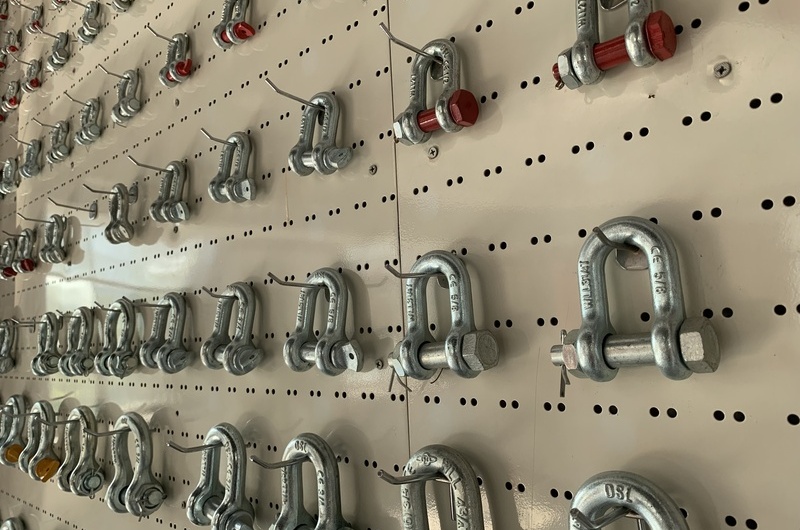
Types and Configurations of Collared Bolts
Collared eye bolts are available in diverse configurations matching varied mounting requirements and application specifications.
Standard Shank Collared Eye Bolts
Configuration: Thread length typically 1.5× to 2× the bolt diameter, suitable for mounting in materials 25-75mm thick with proper thread engagement.
Applications: General industrial overhead lifting points, machinery attachment, rigging tie-offs in standard structural applications.
Load range: Typically M8 (600-800 kg vertical capacity) through M42 (15,000-20,000 kg vertical capacity) depending on grade.
Long Shank Collared Eye Bolts
Configuration: Extended thread length (3× to 5× diameter or more) for mounting through thick materials, multi-plate assemblies, or applications requiring deep penetration.
Applications:
- Thick steel structures (heavy machinery frames, ship structures)
- Multi-layer mounting (through insulation, cladding, structural members)
- Adjustable positioning applications requiring extended thread engagement
- Situations where standard shank length is insufficient for proper thread engagement depth
Advantage: Provides proper thread engagement in thick materials while maintaining collar bearing surface at mounting face.
Availability: Standard sizes (M8-M48) with extended shank lengths specified by application requirements.
Stainless Steel Collared Eye Bolts
Material: Corrosion-resistant stainless steel alloys — most commonly 304 grade (good corrosion resistance, moderate strength) or 316 grade (superior corrosion resistance for marine/chemical environments, slightly lower strength than 304).
Applications:
- Marine environments (boats, docks, offshore platforms)
- Food processing facilities (sanitary design, corrosion resistance)
- Chemical plants (resistance to acidic/alkaline exposure)
- Pharmaceutical manufacturing (clean, non-contaminating)
- Outdoor installations requiring long-term corrosion resistance
Capacity considerations: Stainless steel has approximately 50-60% the tensile strength of equivalent-size carbon steel eye bolts. Always verify load ratings for stainless steel specifically — do NOT assume carbon steel capacities apply.
Cost: Premium pricing (typically 3-5× carbon steel equivalent) justified by corrosion resistance and service life in challenging environments.
Metric vs. Imperial Threading
Metric threading: M8, M10, M12, M16, M20, M24, M30, M36, M42, M48 (most common sizes)
Imperial threading: 1/4″, 3/8″, 1/2″, 5/8″, 3/4″, 1″, 1-1/4″, 1-1/2″, 2″ (North American standard)
Critical: Match threading to tapped hole or nut specifications. Mixing metric and imperial creates dangerous misalignment and inadequate thread engagement.
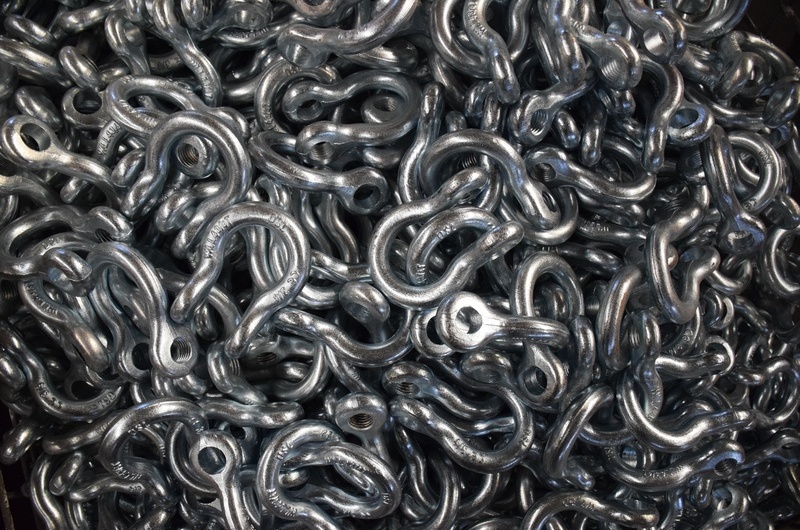
Collared Eye Bolt Lifting Capacity Chart
Understanding collared eye bolt lifting capacity chart data is essential for safe rigging design. Capacity varies significantly based on bolt size, material grade, and load angle.
Capacity Rating Factors
Vertical capacity (0° from bolt axis): Maximum rated load with pull directly inline with bolt threads. Represents the highest capacity configuration.
Angular capacity (45° from vertical): Reduced capacity when load pulls at 45° angle from vertical. Typical reduction: 70-75% of vertical capacity.
Angular capacity (90° from vertical, perpendicular): Further reduced capacity for horizontal pulls perpendicular to bolt axis. Typical reduction: 50-60% of vertical capacity.
NEVER exceed 90° from vertical. Loads beyond 90° create reverse bending stress that can cause catastrophic failure.
Sample Capacity Chart (Carbon Steel, Grade 4.8 minimum)
| Bolt Size | Vertical (0°) | 45° Angle | 90° Angle |
|---|---|---|---|
| M8 | 700 kg | 500 kg | 400 kg |
| M10 | 1,100 kg | 800 kg | 650 kg |
| M12 | 1,600 kg | 1,200 kg | 950 kg |
| M16 | 2,800 kg | 2,000 kg | 1,700 kg |
| M20 | 4,400 kg | 3,200 kg | 2,650 kg |
| M24 | 6,300 kg | 4,500 kg | 3,800 kg |
| M30 | 10,000 kg | 7,200 kg | 6,000 kg |
| M36 | 14,400 kg | 10,300 kg | 8,600 kg |
IMPORTANT: These are approximate values for illustration. ALWAYS verify actual capacity from manufacturer’s certified load charts. Capacity varies by:
- Steel grade (4.8, 8.8, 10.9, 12.9)
- Manufacturing standards (ISO, DIN, ASME, AS/NZS)
- Specific design features
- Safety factors applied
Safety factor: Working load limits (WLL) typically include 5:1 safety factor (breaking strength ÷ 5 = WLL). Never exceed marked WLL.
Stainless Steel Capacity Adjustment
Stainless steel eye bolts have approximately 50-60% the capacity of equivalent carbon steel sizes. Example:
- M16 carbon steel: 2,800 kg vertical
- M16 stainless 304: approximately 1,400-1,700 kg vertical
- M16 stainless 316: approximately 1,300-1,600 kg vertical
Always consult manufacturer data for stainless steel capacities.
Critical Specifications and Quality Indicators
Material and Grade Markings
Carbon steel grades:
Grade 4.8: Minimum acceptable quality for light-duty applications. Proof load 310 MPa, tensile strength 420 MPa minimum.
Grade 8.8: Standard industrial grade. Proof load 640 MPa, tensile strength 800 MPa. Suitable for most overhead lifting applications.
Grade 10.9: High-strength applications. Proof load 900 MPa, tensile strength 1,000 MPa. Used where maximum capacity is required.
Grade 12.9: Ultra-high strength. Proof load 1,080 MPa, tensile strength 1,200 MPa. Specialized applications requiring extreme capacity.
Markings: Quality manufacturers stamp grade marking on bolt head or collar face. Absence of markings indicates unknown or unreliable quality.
Collar (Shoulder) Design
Collar diameter: Should be 1.5× to 2× the bolt thread diameter for proper load distribution. Undersized collars concentrate stress.
Collar thickness: Minimum 0.5× bolt diameter for structural integrity. Thin collars can bend or break under load.
Collar surface finish: Should be smooth, flat, and perpendicular to bolt axis for proper bearing against mounting surface.
Eye Design Quality
Forged vs. cast construction: Forged eye bolts exhibit continuous grain flow through the eye, providing superior strength and fatigue resistance. Cast eye bolts have weaker grain structure and are unacceptable for overhead lifting. Quality eye bolts are ALWAYS forged.
Eye dimensions:
- Inside diameter: Typically 1× to 1.5× bolt diameter
- Eye thickness (wire diameter): Typically 0.5× to 0.8× bolt diameter
- Adequate dimensions ensure strength and accommodate standard rigging hardware (shackles, hooks)
Eye orientation: Must align with load direction during installation. Eye perpendicular to load direction creates bending stress and drastically reduces capacity.
Thread Quality
Thread accuracy: Precision-cut threads engage properly with tapped holes, distributing load across thread engagement length. Poor threads concentrate stress on fewer threads.
Thread length: Must provide adequate engagement (minimum 1× bolt diameter in steel, 1.5× in softer materials like aluminum).
Thread condition: Clean, undamaged threads without burrs or cross-threading that would compromise strength.

Installation Requirements and Best Practices
Proper Installation Procedure
1. Verify specifications:
- Bolt size matches application requirements
- Load capacity exceeds anticipated loads with safety margin
- Material grade appropriate for environment
2. Prepare mounting surface:
- Flat, smooth surface perpendicular to bolt axis
- Adequate material thickness (minimum 2× bolt diameter)
- Material strength adequate to support load
- Tapped hole depth provides 1× to 1.5× diameter thread engagement
3. Thread engagement:
- Apply anti-seize compound to threads (prevents galling, enables future removal)
- Thread bolt until collar contacts mounting surface
- DO NOT over-torque — collar should bear firmly but excessive torque can deform collar or strip threads
4. Torque specifications:
- Follow manufacturer’s recommended torque values
- Typical range: M8 = 10-15 Nm; M12 = 30-40 Nm; M20 = 100-130 Nm; M30 = 300-400 Nm
- Use calibrated torque wrench for critical applications
5. Eye orientation:
- Align eye with anticipated load direction
- For multi-directional loads, position eye for worst-case angle
- NEVER allow eye to rotate during use (can create unexpected angular loading)
6. Lock mechanism (if applicable):
- Install jam nut below collar if specified
- Apply thread-locking compound where appropriate
- Ensure locking mechanism doesn’t interfere with collar bearing surface
Common Installation Errors to Avoid
❌ Insufficient thread engagement: Weak connection that can pull out under load
❌ Over-torquing: Can deform collar, making it ineffective as bearing surface
❌ Under-torquing: Allows bolt to loosen during operation
❌ Misaligned eye: Creates unexpected angular loads reducing capacity
❌ Using washer under collar: Defeats collar’s load distribution function — collar must bear directly on mounting surface
❌ Damaged threads: Cross-threading or forced installation compromises strength
Inspection and Maintenance
Pre-Use Inspection (Required Before Each Lift)
Visual inspection:
- Cracks anywhere on bolt body, eye, or collar
- Deformation or bending of eye
- Thread damage or stripping
- Collar damage or deformation
- Corrosion or material degradation
- Wear at eye contact points
Functional checks:
- Bolt tight in mounting (no looseness)
- Eye orientation correct for load direction
- No binding or interference with rigging hardware
Periodic Detailed Inspection
Frequency: Monthly for frequently-used installations; quarterly for moderate use; annually minimum for all installations.
Inspection elements:
- Dimensional verification (eye opening hasn’t enlarged from wear)
- Thread condition check
- Mounting integrity (material around installation shows no cracking or deterioration)
- Documented inspection with date and inspector identification
Retirement Criteria
Remove eye bolts from service when:
- Any crack anywhere on bolt
- Eye deformed or bent
- Eye opening increased >5% from original dimension
- Threads damaged or stripped
- Collar bent or damaged
- Material corrosion >10% cross-section loss
- Any doubt about safety exists
“When in doubt, take it out” — replacement cost is negligible compared to accident consequences.
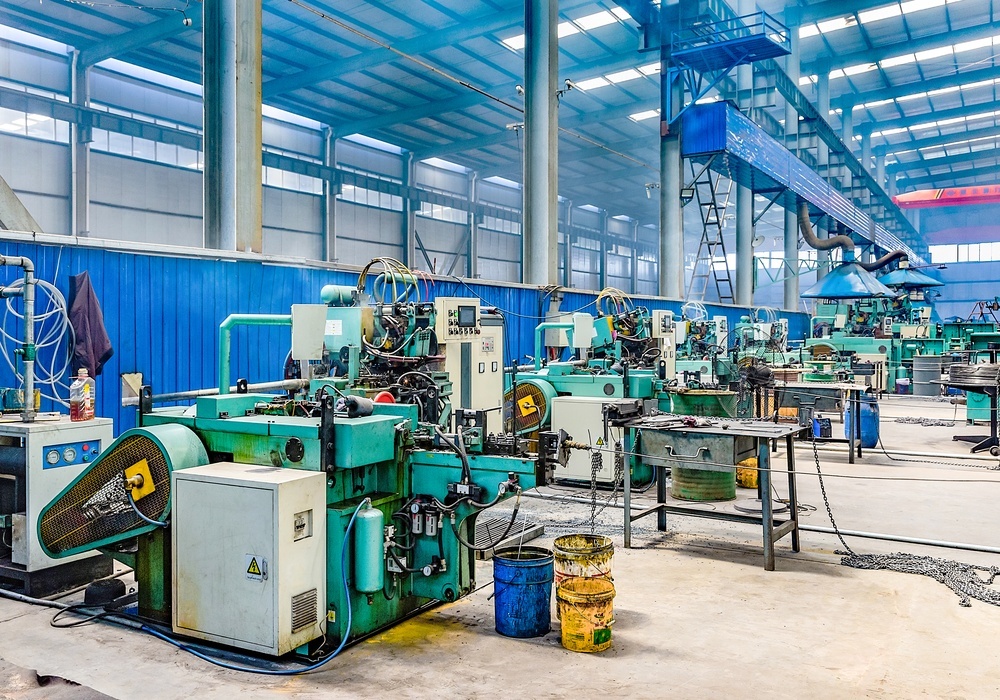
Bolt Collars: Understanding the Design
Bolt collars (the shoulder component) serve multiple critical functions beyond simple load distribution:
Thread protection: Prevents threads from engaging into mounting material, which would compromise strength and prevent proper pre-load development.
Bearing surface: Distributes load across a larger area, reducing stress concentration in mounting material.
Angular load capability: Creates a fulcrum point that allows safe angular loading by distributing forces across the collar rather than creating bending moment at thread root.
Visual indicator: Confirms proper installation — collar should be visible and bearing against mounting surface, not hidden within tapped hole.
Precision machining requirement: Collar must be perpendicular to bolt axis and flat across bearing surface for proper function. Poor machining compromises load distribution.
Shenli Ringing Collared Eye Bolts
Shenli Ringing manufactures precision-forged collared eye bolts for industrial B2B customers worldwide, integrating our forging expertise with rigorous quality control and load testing.
Our Product Range
Standard Carbon Steel Collared Eye Bolts:
- Sizes: M8 through M48 (metric); 1/4″ through 2″ (imperial)
- Material: Carbon steel, Grade 8.8 standard (Grade 10.9 available)
- Surface: Zinc plated (standard), hot-dip galvanized, powder coated
- Capacities: 700 kg (M8) through 20,000+ kg (M48) vertical lift
Long Shank Collared Eye Bolts:
- Extended thread lengths for thick material mounting
- Custom shank lengths available
- Same load capacities as standard shank (verified through testing)
Stainless Steel Collared Eye Bolts:
- Material: 304 grade (standard), 316 grade (marine/chemical)
- Sizes: M8 through M36
- Electropolished finish available for food/pharmaceutical
- Load rated specifically for stainless steel properties
Custom Configurations:
- Special eye sizes for unique rigging hardware
- Non-standard thread lengths
- Special materials for extreme environments
- Custom load testing and certification
Quality Assurance
Manufacturing standards:
- ISO 9001:2015 certified production
- Forged construction (never cast)
- CNC machining for collar precision
- Heat treatment for specified grades
Testing and certification:
- 100% dimensional verification
- Statistical proof load testing (150% of WLL)
- Breaking strength testing on production samples
- Material certificates from steel suppliers
- Load charts certified by engineering
Documentation:
- Individual product markings (size, grade, capacity)
- Load capacity charts with each order
- Material certificates
- Test reports
- Installation guidelines
Why Choose Shenli Ringing
Forging expertise: In-house forging capability ensures grain flow integrity and consistent quality.
Engineering support: Load calculation assistance, installation guidance, custom specification development.
Quality focus: Professional-grade products for demanding applications — not commodity hardware.
Competitive pricing: Factory-direct eliminates distributor margins while maintaining quality.
Global compliance: Products meet ISO, DIN, ASME, and AS/NZS standards.
Responsive service: Technical inquiries within 24 hours; quotations within 48 hours.
Conclusion
Collared eye bolts represent critical safety hardware where proper specification, quality manufacturing, and correct installation directly affect personnel safety and operational reliability. Understanding the distinction between collared bolt designs and standard eye bolts, consulting collared eye bolt lifting capacity chart data for proper sizing, selecting appropriate configurations like long shank collared eye bolts or stainless steel collared eye bolts for specific environments, and sourcing from qualified manufacturers ensures optimal investment in hardware that delivers decades of safe service.
Shenli Ringing provides precision-forged collared eye bolts engineered to international standards, backed by comprehensive testing and responsive technical support.