
Clevis Hook Essentials: The Ultimate Engineering Guide to Grade 70 Clevis Grab Hooks, Slip Hooks, and Safe Rigging

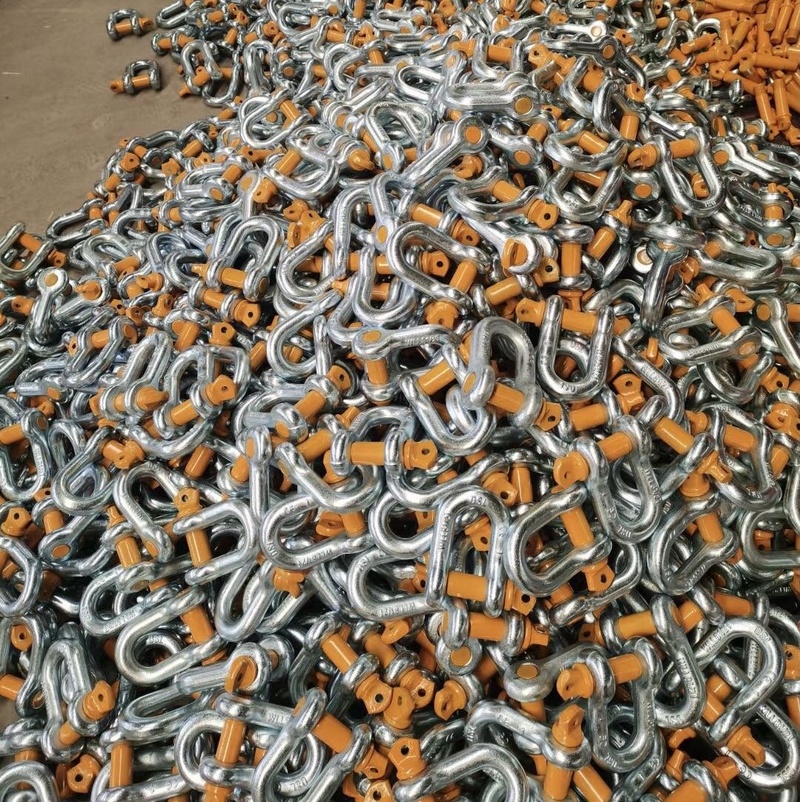
In heavy transport, agricultural towing, construction rigging, and industrial material handling, mechanical connections must never be a point of guesswork. Among the most widely deployed connection fittings in the world is the clevis hook—a versatile, high-strength end termination engineered for swift, secure attachment directly to chain links without requiring intermediate coupling links.
However, selecting the incorrect hook profile or mismatching material grades can result in catastrophic failure under dynamic loads. Whether you are outfitting flatbed tie-down assemblies, setting up construction hoists, or securing heavy earthmoving machinery, understanding the mechanical distinctions behind fittings such as the grab hook clevis, standard slip hooks, and transport-grade alloys is critical to maintaining safe, compliant operations.
This technical buyer’s guide explores the engineering, load capabilities, and practical selection criteria for clevis-style fittings, detailing why forged steel clevis grab hook Grade 70 assemblies remain the industry standard for secure load binding and heavy towing.
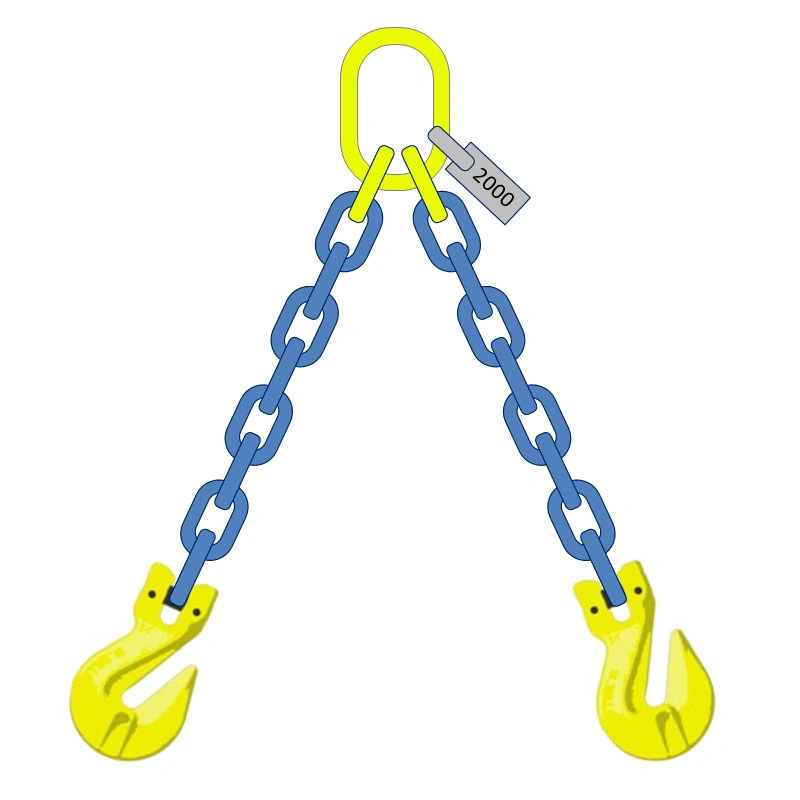
two leg chain sling
1. What Is a Clevis Hook? Engineering, Anatomy, and Fastening Mechanics
A clevis hook is defined by its distinctive U-shaped mounting base (the clevis), which integrates a through-hole, a load pin, and a retaining mechanism (typically a cotter pin, roll pin, or threaded nut and cotter).
        === CLEVIS INTERFACE ===
             |   [ PIN ]   |  <--- Load pin runs through chain link
             \             /
              \           /
               |         |
               |         |
              /           \
             |    BOWL     \  <--- Shaped for either slip or grab geometry
              \___________/
The Clevis Advantage vs. Eye Hooks
Traditional eye hooks feature a solid, closed circular eyelet. Installing an eye hook onto a chain assembly requires cutting a link, using an open repair link, or introducing a mechanical connecting link (such as a Hammerlok).
In contrast, a clevis hook mounts directly into the terminal link of the chain:
-
The load pin slides cleanly through the throat of the clevis saddle and the inner radius of the chain link.
-
A heat-treated alloy retaining pin locks the load pin in position.
-
The connection eliminates bulky intermediate hardware, reducing weight, hardware fatigue points, and overall assembly cost.
Industrial manufacturers like Shenli Rigging design forged steel clevis components to mate seamlessly with specific wire diameters, ensuring minimal lateral play and preventing rotational pinching under tension.
Lifting Chain
2. Slip Hook vs Grab Hook: Choosing the Right Throat Geometry
One of the most frequent points of confusion in rigging and transport procurement is the debate over slip hook vs grab hook. While both fittings can feature a clevis base, their throat geometries serve opposing mechanical functions.
       SLIP HOOK                      GRAB HOOK
     (Wide Throat)                 (Narrow Throat)
         |   |                          | |
        /     \                         | |  <-- Accommodates
       |       \                        | |      single link thickness
       |   O   |  <-- Large opening     \ /
        \_____/       for rings/slings   v   <-- Link seats in cradle base
The Chain Grab Hook
A chain grab hook features a narrow, deep throat profile engineered specifically to capture and seat a single link of chain along its narrow edge.
-
How It Works: The chain link drops into the throat slot, while the adjacent perpendicular link rests against the broad exterior shoulders (or cradle) of the hook body.
-
Primary Utility: Adjusting chain length (shortening), forming tight non-choking loops, and serving as the end fittings on ratchet binder transport chains.
-
Load Retention: When a link is properly engaged in a grab hook clevis, the chain cannot slip or slide through the throat, creating an instant mechanical lock.
The Chain Slip Hook
Conversely, a chain slip hook features a wide, open throat and a rounded bowl.
-
How It Works: Wire rope eyes, master links, synthetic sling hardware, or chain can slide freely through the throat and seat directly in the bottom curve (bowl) of the hook.
-
Primary Utility: General-purpose pulling, towing bridles, and overhead sling assemblies where wide clearance is required to slip over large anchoring points.
-
Safety Requirement: Slip hooks used on job sites should almost always feature a heavy-duty safety latch to prevent accidental detachment when tension drops.
Comparison Overview
| Feature | Clevis Grab Hook | Clevis Slip Hook |
| Throat Width | Narrow (matches chain wire gauge) | Wide (open clearance) |
| Chain Action | Locks chain link in place; no movement | Chain or hardware slides freely in bowl |
| Primary Use Cases | Chain shortening, tie-down binding | Towing bridles, pulling, sling rigging |
| Safety Latch | Rare (unnecessary for slotted link seats) | Recommended/mandatory for general rigging |
| Overhead Lifting | Permissible only in Grade 80/100 configurations | Permissible in Grade 80/100 (with latch) |
3. Grade 70 Chain Hooks: The Workhorse of Heavy Transport and Cargo Securement
While Grade 80 and Grade 100 chains are mandatory for overhead lifting, Grade 70 chain hooks dominate the global freight, overland logistics, agricultural, and towing industries.
Metallurgy and Manufacturing
Grade 70 components are forged from heat-treated carbon alloy steel that has been quenched and tempered to yield superior tensile strength and surface hardness.
-
Tensile Strength: Approximately $700\text{ N/mm}^2$.
-
Design Factor: Built with a standard 4:1 safety factor (Minimum Breaking Strength = $4 \times \text{Working Load Limit}$).
-
Surface Coating: Typically finished with a gold chromate (yellow zinc dichromate) conversion bath. This distinctive iridescent gold finish provides robust corrosion resistance against rain, road salts, and dirt, while alerting riggers and Department of Transportation (DOT) inspectors that the hardware meets Grade 70 transport specifications.
The Role of the Towing Clevis Hook in DOT Cargo Securement
In vehicle transport and flatbed freight, shifting cargo causes severe road hazards. The Federal Motor Carrier Safety Administration (FMCSA) and commercial vehicle safety alliances maintain strict enforcement guidelines regarding cargo tie-downs:
-
Under FMCSA 49 CFR § 393.102, tie-down assemblies must have an aggregate working load limit equal to at least 50% of the weight of the article being secured.
-
A certified towing clevis hook attached to heavy transport chain allows operators to hook directly into trailer rub rails, D-rings, stake pockets, or chassis tie-down points without fear of slippage.
-
Because a transport binder system experiences sudden dynamic shock loads from highway braking, road bumps, and cornering, forged alloy steel hooks prevent structural yielding or link spread.

4. Engineering Focus: Clevis Grab Hook Grade 70 Specifications
For direct tie-downs and chain shortening, the Hook, Clevis Grab Hook, Clevis Grab Hook Grade 70 lineup offers matched performance to transport binder chains. Industrial manufacturers forge these hooks with reinforced cradles that support the entire cross-section of the chain link, preventing localized link crushing under maximum working loads.
The table below outlines common dimensional and capacity metrics for Grade 70 clevis grab hooks:
| Trade Size (in) | Wire Diameter (mm) | Working Load Limit (WLL – lbs) | Working Load Limit (WLL – kg) | Minimum Breaking Strength (lbs) |
| 1/4″ | 7 mm | 3,150 lbs | 1,428 kg | 12,600 lbs |
| 5/16″ | 8 mm | 4,700 lbs | 2,131 kg | 18,800 lbs |
| 3/8″ | 10 mm | 6,600 lbs | 2,993 kg | 26,400 lbs |
| 1/2″ | 13 mm | 11,300 lbs | 5,125 kg | 45,200 lbs |
| 5/8″ | 16 mm | 15,800 lbs | 7,166 kg | 63,200 lbs |
Note: The Working Load Limit of the entire assembly is always determined by the lowest-rated component. Connecting a 3/8″ Grade 70 hook (6,600 lbs WLL) to a Grade 43 chain (5,400 lbs WLL) derates the entire system to 5,400 lbs.
5. Industrial and Construction Applications
Industrial hardware providers, including Shenli Rigging, engineer forged steel clevis grab hooks to handle grueling, real-world field conditions across multiple sectors:
Heavy Equipment Transport
Excavators, track loaders, bulldozers, and agricultural tractors require four-point corner tie-downs to lowboy trailers. Grade 70 clevis grab hooks link directly to binder chains, allowing transport operators to cinch ratchet binders taut and shorten excess chain segments without leaving hazardous slack.
[Lowboy D-Ring] <--- Clevis Grab Hook === (G70 Chain) === [Ratchet Binder] ---> [Excavator Track]
Construction Site Rigging & Pulling
On construction jobs, operators utilize clevis grab hooks on winch lines, draglines, and utility tractor buckets. The quick-mount clevis system allows crews to replace a worn hook on-site within minutes using standard hand tools—simply driving out the roll pin and installing a replacement load pin without requiring hot-forge work or specialized welding.
Agricultural and Logging Recovery
Skidding logs or pulling stalled farm implements demands hardware capable of resisting torsional shock. Forged steel grain flows align with the contour of the hook body, granting exceptional ductility so that extreme momentary overloads cause noticeable plastic deformation rather than instantaneous, brittle shattering.

6. How to Install and Secure a Clevis Hook
Improper installation of the clevis pin can cause field disconnects. Follow this standardized procedure when mounting a clevis hook to a chain assembly:
-
Inspect Component Compatibility: Ensure the nominal size of the clevis slot matches the wire diameter of your chain (e.g., install a 3/8″ hook on a 3/8″ chain). Verify that both components share compatible strength grades.
-
Align the Saddle: Slide the open clevis saddle over the end link of the chain. Align the through-holes of the clevis ear with the internal opening of the chain link.
-
Insert the Load Pin: Slide the hardened alloy load pin fully through the clevis ears and chain link. The pin should rotate smoothly without binding against the chain link crown.
-
Lock the Retaining Fastener:
-
For cotter pin designs: Spread the cotter pin legs outward at an angle of at least 60 degrees.
-
For roll pin / spring pin designs: Use a ball-peen hammer and drift punch to drive the roll pin through the locking groove until it sits centered and flush within the clevis collar.
-
-
Verify Free Articulation: Ensure the chain link moves freely around the pin. A pinned connection that binds or restricts movement can induce bending moments on the pin, compromising working load limits.
7. Inspection, Maintenance, and Removal Criteria
Adhering to strict safety standards (including OSHA 1910.184, ASME B30.10, and FMCSA standards) requires regular, documented inspections of all hooks and fittings.
       AREAS OF CRITICAL HOOK WEAR
               [ Clevis Ear & Pin ]  <-- Check for pin bending or ear spreading
                       | |
                      /   \
                     |     \
   Check for wear -> |      \  <-- Check throat width for opening spread
   at inner saddle    \_____/
Critical Rejection Criteria: When to Discard a Clevis Hook
Remove any clevis hook from service immediately if an inspection reveals any of the following conditions:
-
Throat Spread / Opening Distortion: Measure the throat opening against manufacturer baseline drawings. Any visible widening or a dimensional increase exceeding 5% of the original throat opening indicates severe overloading; discard the hook immediately.
-
Wear in the Saddle / Bowl: Inspect the load-bearing area where the chain link rests. If material wear exceeds 10% of the original cross-sectional dimension, the hook has lost its structural safety margin.
-
Bending or Twisting: Any body twist or bend exceeding 0 degrees out of plane requires immediate condemnation. Never attempt to heat-treat, bend back, or weld an alloy hook.
-
Cracks, Nicks, or Gouges: Surface cracks or gouges concentrate stress lines, leading to rapid fatigue failure under load cycles. Perform liquid penetrant or magnetic particle testing if microscopic cracking is suspected.
-
Damaged or Modified Pins: Never replace a certified, heat-treated clevis load pin with a standard hardware bolt. Doing so instantly invalidates load ratings and violates regulatory compliance.

Summary: Securing Operational Safety with Precision Hardware
Your rigging and cargo securement systems are only as dependable as their terminal fittings. Whether your operations require a wide-throat chain slip hook for dynamic pulling or a heavy-duty clevis grab hook Grade 70 for flatbed tie-down assemblies, selecting forged, certified components ensures maximum uptime, legal compliance, and worker safety.
By sourcing precision-manufactured, fully heat-treated forged steel clevis grab hooks from proven industry providers like Shenli Rigging, fleet operators and rigging crews obtain the structural integrity and durability required to handle high-demand industrial tasks safely.