
Ultimate Buyer’s & Safety Guide to Grade 100 Chain Hooks: Rigging, Transport, and Overhead Lifting Standards

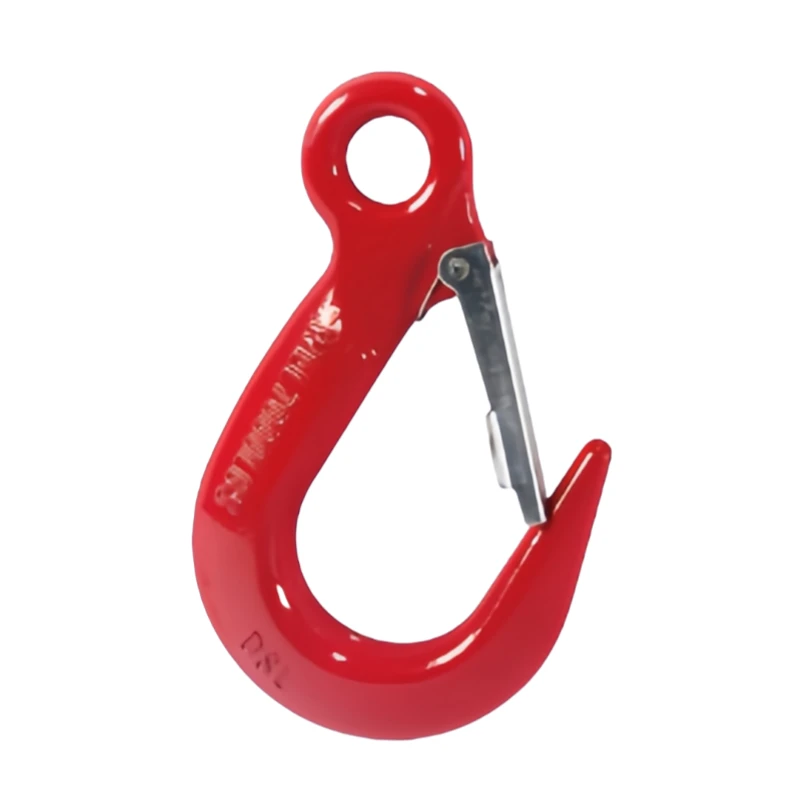
Whether you are configuring an overhead multi-leg bridle sling in an industrial fabrication yard or securing heavy machinery onto a lowboy trailer for interstate transit, the mechanical integrity of your rigging assembly hinges on a single, critical interface: your chain hooks.
In high-stress lifting applications, there is zero margin for error. Mismatched fittings, poorly understood throat geometry, or failing to pair the proper Grade 100 (Grade 10) hardware with calibrated alloy chain can lead to catastrophic hardware failure, job site shutdowns, and strict OSHA/ASME safety violations.
This engineering-backed guide cuts through the confusion surrounding modern chain hooks. We examine how Grade 100 hardware differs from legacy standards, compare key hook architectures (such as the standard chain slip hook versus grab and foundry hooks), analyze common sizing parameters like the 3 8 chain hook and 5 16 chain hook, inspect chain hook latch mechanisms, and review specialized marine and transport use cases.
1. What Makes Grade 10 (Grade 100) Chain Hooks the Modern Industry Standard?
Historically, Grade 80 (G80) alloy steel was the universal baseline for overhead lifting slings. However, modern heavy industrial sectors—ranging from aerospace assembly lines to offshore energy construction—increasingly specify Grade 100 (Grade 10) rigging hardware.
The Mechanical Advantage of G100
Grade 100 alloy steel is forged from specialized heat-treated, quenched, and tempered steel formulations containing micro-alloys of nickel, chromium, and molybdenum.
-
Tensile Strength: Minimum ultimate tensile strength of $1,000\text{ N/mm}^2$ (compared to $800\text{ N/mm}^2$ for Grade 80).
-
Strength-to-Weight Benefit: Grade 100 hardware delivers approximately 25% higher Working Load Limits (WLL) than Grade 80 components of the exact same wire diameter.
This capacity leap fundamentally changes ground-level operations. Instead of rigging crews wrestling with cumbersome $1/2\text{-inch}$ or $5/8\text{-inch}$ assemblies overhead, a lighter $3/8\text{-inch}$ G100 setup can often execute the identical lift, drastically reducing dynamic fatigue on equipment and physical strain on riggers.
Visual Identification and Traceability
Under ASME B30.10 (Hooks) and EN 1677 compliance criteria, every overhead lifting hook must provide traceable, permanent forge markings:
-
Manufacturer Code: Identifies the forge house (e.g., Crosby, Pewag, Yoke).
-
Grade Rating: Stamped clearly with
10,100, orV(denoting Grade 100). -
Trace Code/Batch Number: Allows access to the manufacturer’s original Mill Test Certificate (MTC) and proof-load testing data.
-
Component Size: Metric or fractional nominal size stamped directly on the bowl or neck.
2. Types of Chain Hooks: Matching Throat Geometry to Your Application
Not all chain hooks function the same way. The configuration of the hook’s throat, bowl, and connection interface dictates its mechanical purpose.
       [EYE HOOK]                     [CLEVIS HOOK]
          ( O )  <- Welded/Coupled       \  |  /  <- Direct Link Mount
            |                              ---
          /   \                          /     \
         |     \                        |       \
          \___/                          \_____/
A. Clevis vs. Eye Connection Profiles
Before evaluating throat mechanics, you must select the appropriate termination style:
-
Clevis Style: Features an integrated U-shaped saddle with a load pin and retaining roll pin/cotter pin. It mounts directly onto the terminal link of a chain sling without requiring an intermediate mechanical coupling link (such as a Hammerlok/connecting link). A clevis hook with latch is widely favored for field rigging repairs and dedicated crane hooks because it minimizes overall sling weight and hardware count.
-
Eye Style: Features a solid, closed steel eyelet. It requires an alloy connecting link to mate with a chain sling, but offers greater multi-directional articulation and can easily interface with wire rope thimbles, synthetic web sling hardware, or crane hoist shackles.
B. Chain Slip Hook (Sling Hook)
A chain slip hook—frequently referred to as a standard sling hook—features a wide, open throat designed to facilitate quick engagement with:
-
Master links and sub-assemblies.
-
Eye bolts and engineered lifting lugs.
-
Wire rope thimbles and round slings.
Because of the wide throat opening, an overhead lifting slip hook must almost universally incorporate an operational chain hook latch. The latch bridges the throat entrance to keep rigging attachments seated deep in the bowl when the sling goes slack between lifts.
C. Chain Grab Hooks: Standard vs. Cradle Design
Unlike a slip hook, a chain grab hook possesses a narrow, specialized throat profile calibrated precisely to the width of a single chain link. It is engineered specifically to shorten the leg of a chain sling without derating the overall working capacity (provided it is a cradle-style hook).
   STANDARD CRADLE GRAB HOOK                SLIP / SLING HOOK
         [Narrow Throat]                     [Wide Deep Throat]
             |   |                                |       |
             |   |  <- Link Slots                 |   O   |  <- Wide Latch
             \___/     Into Pocket                 \_____/      Seating Area
Leading rigging warehouses carry premier forged brands, including:
-
Crosby (e.g., L-1338 / A-1338 Cradle Grab Hooks): Industry-standard support cradles designed to support the link directly beneath it, eliminating link deformation.
-
Pewag (e.g., KHSW / XKW Clevis Grab Hooks): High-precision European metallurgy featuring full Working Load Limit retention with zero chain degradation.
-
Yoke (Grade 100 Series): Cost-effective, fully certified high-tensile rigging hardware trusted on global construction sites.
D. Self-Locking Hooks (Positive Locking Safety Hooks)
For mission-critical overhead safety, self-locking hooks represent the gold standard. As soon as a load is applied to the bowl, the integrated latch closes and mechanically locks behind the hook tip.
-
The latch cannot be forced open while the hook is under tension.
-
Even if the load snags or bounces, the trigger requires deliberate manual actuation by the rigger to release.

3. Demystifying the Chain Hook Latch: Safety Standards & Field Failures
A missing, bent, or bypassed chain hook latch is consistently cited as one of the most frequent mechanical infractions during annual OSHA and third-party crane inspections.
Is a Latch Legally Mandated?
-
OSHA 1910.184 & 1926.1431: Mandate that hooks shall be equipped with latches whenever hoists or cranes are handling personnel platforms, or when open-throat conditions risk unhooking the load.
-
ASME B30.10: Specifies that while open-throat hooks may be used in specialized industrial handling where latch clearance poses a catching hazard (such as chemical dip tanks or foundry molten metal pouring), standard overhead construction rigging slings must utilize latches unless the rigging engineer explicitly documents an exclusion.
The Difference Between Heavy-Duty Latches and Stamped Sheet Metal
Standard utility hooks often rely on thin, stamped sheet metal latches secured by light torsion springs. On a rough-and-tumble construction site, dragging these hooks over structural steel bends the sheet metal out of alignment within days, causing it to pop loose.
When procuring Grade 100 sling hardware, insist on integrated, heavy-duty cast latches with embedded stainless steel springs:
-
The latch tip seats securely into a machined groove or pocket inside the hook tip, preventing lateral displacement when side-loaded.
-
Replaceable latch kits should be kept in site inventory to prevent crews from using makeshift zip-ties or duct tape—practices that violate federal rigging safety standards.

4. Size-by-Size Engineering Focus: 5/16″ vs. 3/8″
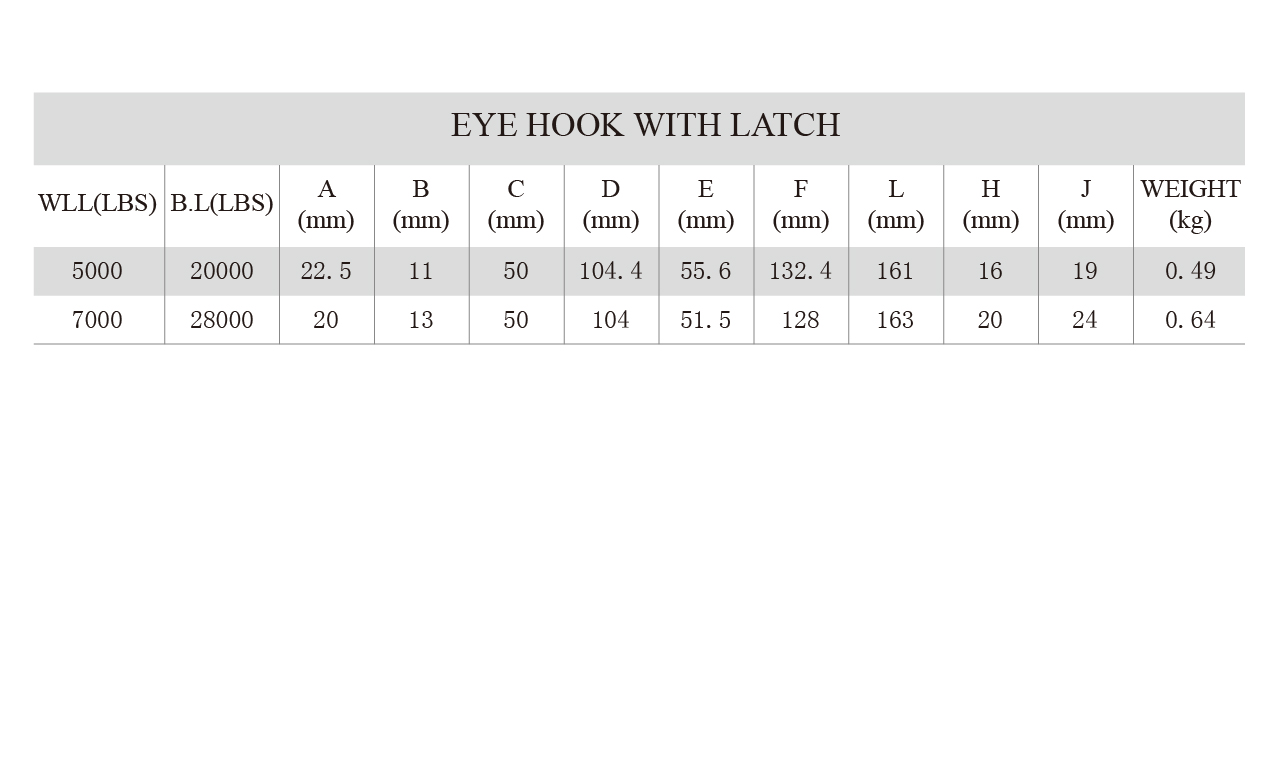
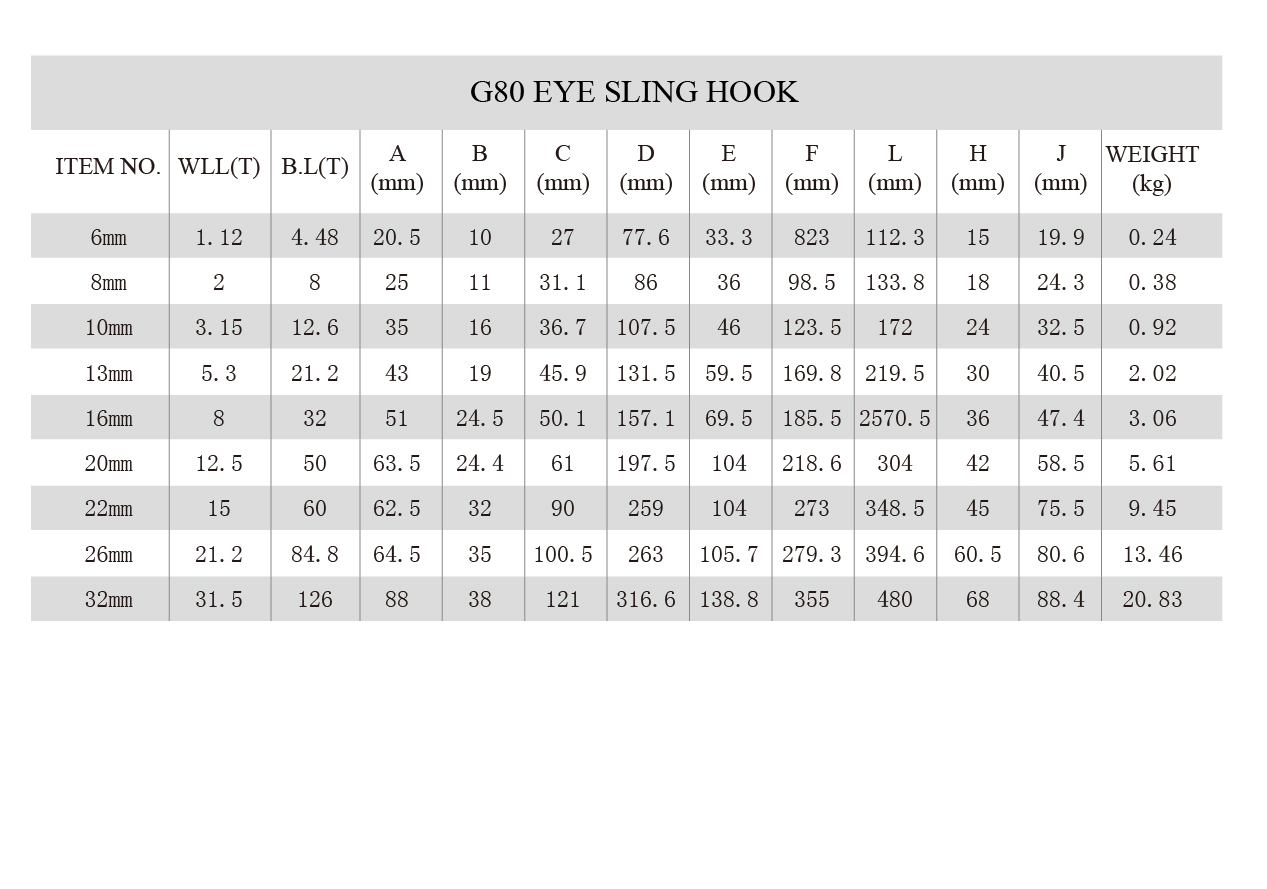
Two sizes dominate mobile crane bays, industrial rigging boxes, and flatbed transport trailers: the 5 16 chain hook and the 3 8 chain hook. Understanding their exact mechanical envelopes prevents accidental overloading.
The 5/16″ Hardware Envelope
A 5 16 chain hook is the standard for mid-range manufacturing, engine extraction, generator rigging, and DOT transport tie-downs:
-
Chain Gauge: 5/16-inch (8 mm nominal).
-
Grade 80 WLL: 4,500 lbs (2,040 kg).
-
Grade 100 WLL: 5,700 lbs (2,585 kg).
-
Primary Utility: Paired with ratchet load binders for machine transport, light excavator anchoring, and single-point light hoist lines.
The 3/8″ Workhorse Standard
The chain hook 3 8 (3/8-inch / 10 mm) is arguably the most common heavy-rigging fitting in existence:
-
Chain Gauge: 3/8-inch (10 mm nominal).
-
Grade 80 WLL: 7,100 lbs (3,220 kg).
-
Grade 100 WLL: 8,800 lbs (3,990 kg).
-
Primary Utility: Structural steel erection, heavy earthmoving equipment hauling, 4-leg overhead bridle sling configurations, and high-duty shipyard gantry rigging.
Engineering Capacity Matrix (Grade 80 vs. Grade 100)
| Nominal Chain Size | Hook Style / Interface | Grade 80 WLL (4:1 Safety Factor) | Grade 100 WLL (4:1 Safety Factor) |
| 1/4″ (6 mm) | Clevis Slip / Grab | 3,500 lbs (1,588 kg) | 4,300 lbs (1,950 kg) |
| 5/16″ (8 mm) | Clevis / Eye with Latch | 4,500 lbs (2,041 kg) | 5,700 lbs (2,585 kg) |
| 3/8″ (10 mm) | Clevis Hook with Latch | 7,100 lbs (3,220 kg) | 8,800 lbs (3,991 kg) |
| 1/2″ (13 mm) | Self-Locking / Grab | 12,000 lbs (5,443 kg) | 15,000 lbs (6,804 kg) |
| 5/8″ (16 mm) | Heavy Foundry / Cradle | 18,100 lbs (8,210 kg) | 22,600 lbs (10,250 kg) |
Note: For internal hoist load chains under ASME B30.16 or European hoist norms, safety factors may require 5:1 calculations. Verify matching working limits across every connected link, shackle, and master ring.
5. Beyond Overhead Lifting: Heavy Transport and Marine Anchor Applications
While Grade 100 hooks are primarily engineered for overhead lifting slings, high-strength hooks also serve distinct specialized purposes in overland transport and blue-water marine operations.
A. Transport Chain Hooks and Cargo Securement (DOT Compliance)
In flatbed and heavy equipment logistics, keeping massive payloads stationary during sudden braking maneuvers requires specialized tie-down fittings. Complete tie-down assemblies incorporate clevis grab hooks and slip hooks directly linked to high-tensile binder chains.
Key transport criteria include:
-
DOT Regulations (FMCSA 393.102): Mandate that tie-down assemblies have an aggregate working load limit equal to at least half the weight of the secured cargo.
-
Using high-grade transport chain hooks with specialized cradle beds prevents link crushing when chains are cranked down under thousands of pounds of binder tension.
-
A clevis hook with latch prevents tie-down chains from disengaging when traversing rough, pothole-riddled hauling corridors where transport trailers bounce and temporarily unload binder tension.
B. Stainless Steel Chain Grab Hooks: Marine Load Dampening
Industrial rigging hooks are carbon-alloy based, but harsh saltwater marine environments demand specialized corrosion resistance:
           [ANCHOR ROLLER / BOW]
                    |
           [Anchor Rode Chain]
                    |
             =====(GRAB)=====  <- Marine Stainless Grab Hook
            /                 \
     [Snubber Line]     [Snubber Line]
            \                 /
             =================
             [Cleats on Deck]
-
Taking the Anchor Load: A cast or forged stainless steel chain grab hook (often Marine Grade 316) is attached to a nylon snubber bridle. Once the anchor is set, the grab hook slots onto a link of the stainless anchor chain.
-
Silencing Noisy Chains: By taking the load off the anchor windlass and transferring it to the deck cleats via the snubber bridle, it eliminates the metallic clanking and groaning of chain vibrating against the bow roller as the vessel pitches in an anchorage.
-
Shock Absorption: It isolates the windlass gearbox from destructive surge shock loads, protecting the deck structure.

6. Safe Rigging Practices: Inspection, Care, and Rejection Criteria
Under ASME B30.10 and federal safety rules, hooks must undergo initial, frequent (pre-shift), and periodic documented inspections. A damaged hook must be removed from service immediately—never welded, heat-straightened, or modified in the field.
Daily Pre-Shift Checklist for Riggers
-
Throat Opening Measurement: Check for throat spread. If the hook opening has widened by more than 5% of its original dimension (or $1/4\text{ inch}$, whichever is less), the hook has endured an unrecorded overload and must be condemned.
-
Bowl Wear & Gauging: Inspect the load-bearing saddle. If wear exceeds 10% of the original cross-sectional dimension, the hook must be discarded.
-
Twisting and Bending: Any visible twist of more than 0 degrees in the hook body indicates catastrophic lateral loading. Condemn immediately.
-
Latch Engagement: The chain hook latch must bridge the throat completely and lock securely into the tip nose without catching or binding. The spring must snap the latch closed automatically when released.
-
Tip-Loading Infractions: Never rest the weight of the load directly on the hook tip or the latch! Chain hooks are strictly designed for in-line saddle loading. Tip-loading introduces massive bending moments that reduce ultimate hook capacity by up to 70–80%, inviting sudden fracture.
Summary: Building a Safe, High-Performance Chain Sling
Your lifting assemblies and cargo securement rigs are only as dependable as the weakest link connecting them. Upgrading to Grade 100 chain hooks gives your operation a substantial boost in Working Load Limit without adding unnecessary dead weight.
Whether you are configuring a custom 4-leg bridle with a chain hook 3 8, installing a clevis hook with latch to safeguard crane operations, or setting up heavy machinery transport chains, always source your components from accredited rigging providers (such as Crosby, Pewag, and Yoke) who supply certified, traceable proof-testing. Prioritize safety, verify your clearances, and maintain your latches on every shift.