
Complete Anatomy of Wire Rope Slings


The Complete Anatomy of Wire Rope Slings
They may look simple, but wire rope slings play a critical role in various industries, including construction, shipping, material handling, and rigging.
You can use them to make permanent or temporary attachments. You can attach a wire rope sling to a hoist or crane to move large loads.
The unique physical properties and resistance to abrasion make it easier to use these slings with shackles, hooks, and swivels for a variety of material handling applications. They also provide strength, durability, and resistance to abrasion or elements.
However, this seemingly simple lifting device comes with a unique structure and functional properties. Let’s take a look at the complete anatomy of wire rope slings.
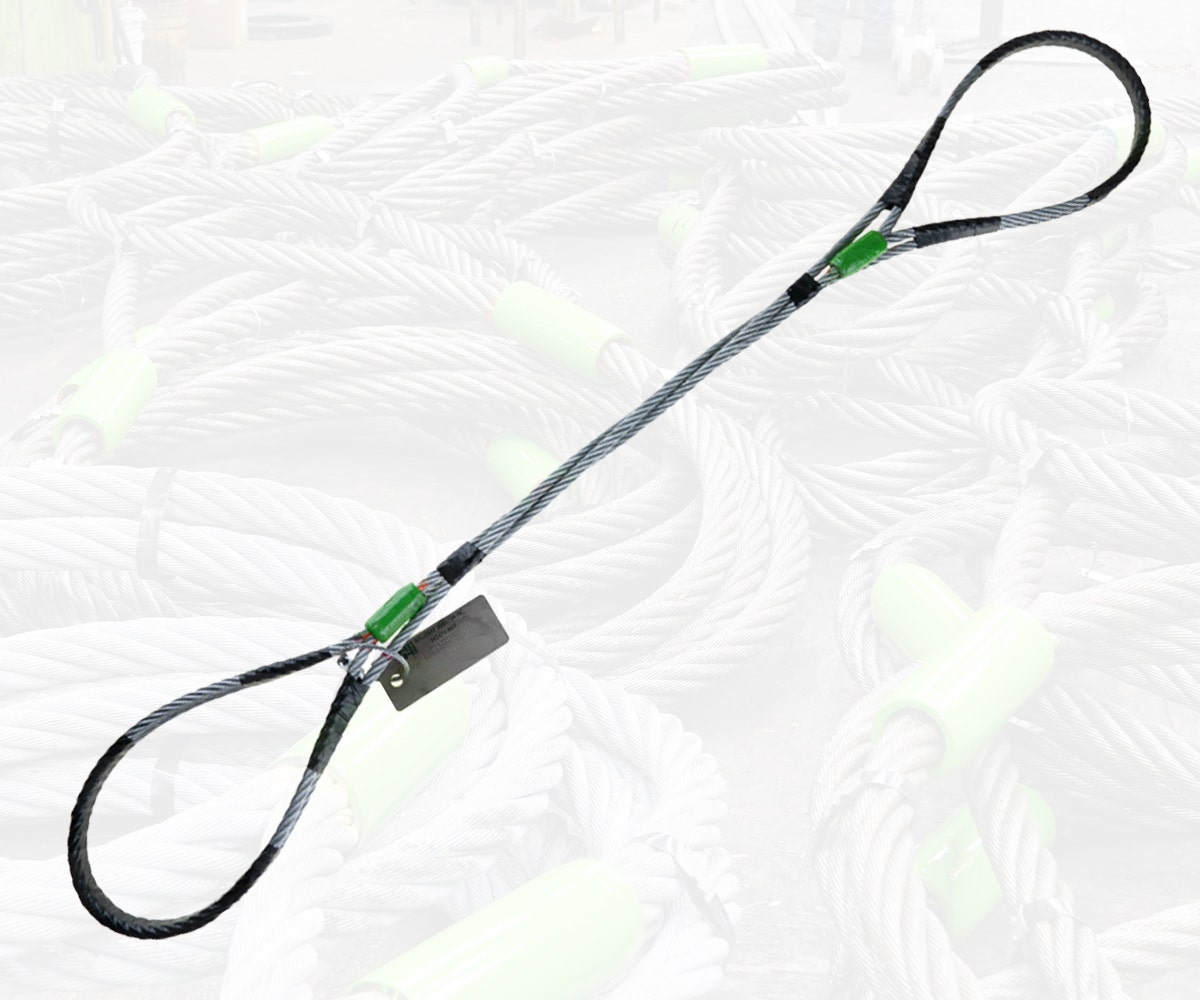
1. What Is a Wire Rope Sling?
A typical wire rope sling consists of a wire rope made from small individual steel wires twisted together. Both ends of the wire rope are looped together individually to form a sling. The wire rope is the fundamental component of a sling.
These slings come in a variety of sizes, shapes, and tensile strengths. The most common ones are those with an eye loop swaged on both ends of the sling.
Let’s take a look at the structure and mechanics of a wire rope in the next point.
2. Understanding the Anatomy of a Wire Rope
A typical heavy-duty wire rope has multiple small twisted strands made from various grades of steel. The configuration and number of these strands changes, depending on how complicated the pattern is.
Usually, a typical rope comes with hundreds of outer wire strands covering the core strand. All these strands move together as well as independently, providing the wire rope with the necessary strength and flexibility. The mechanics of this movement are quite complex.
A. Parts of the Wire Rope
The typical wire rope consists of the following three components:
- Wires
A wire is the smallest part of a wire rope. You can use different types of metals, including stainless steel, iron, steel, and bronze to make the wires. The grade of the material used for making the wire depends on strength, abrasion resistance, and durability required for the intended application.
- Strands
You can create a strand by twisting two or more wires together tightly in a precise pattern. Again, the weaving pattern will be determined by the end-application of the rope.
- cURL Too many subrequests by single Worker invocation. To configure this limit, refer to https://developers.cloudflare.com/workers/wrangler/configuration/#limits
cURL Too many subrequests by single Worker invocation. To configure this limit, refer to https://developers.cloudflare.com/workers/wrangler/configuration/#limits cURL Too many subrequests by single Worker invocation. To configure this limit, refer to https://developers.cloudflare.com/workers/wrangler/configuration/#limits. cURL Too many subrequests by single Worker invocation. To configure this limit, refer to https://developers.cloudflare.com/workers/wrangler/configuration/#limits.
cURL Too many subrequests by single Worker invocation. To configure this limit, refer to https://developers.cloudflare.com/workers/wrangler/configuration/#limits
cURL Too many subrequests by single Worker invocation. To configure this limit, refer to https://developers.cloudflare.com/workers/wrangler/configuration/#limits.
cURL Too many subrequests by single Worker invocation. To configure this limit, refer to https://developers.cloudflare.com/workers/wrangler/configuration/#limits.
- cURL Too many subrequests by single Worker invocation. To configure this limit, refer to https://developers.cloudflare.com/workers/wrangler/configuration/#limits
cURL Too many subrequests by single Worker invocation. To configure this limit, refer to https://developers.cloudflare.com/workers/wrangler/configuration/#limits.
- cURL Too many subrequests by single Worker invocation. To configure this limit, refer to https://developers.cloudflare.com/workers/wrangler/configuration/#limits
cURL Too many subrequests by single Worker invocation. To configure this limit, refer to https://developers.cloudflare.com/workers/wrangler/configuration/#limits.
- cURL Too many subrequests by single Worker invocation. To configure this limit, refer to https://developers.cloudflare.com/workers/wrangler/configuration/#limits
cURL Too many subrequests by single Worker invocation. To configure this limit, refer to https://developers.cloudflare.com/workers/wrangler/configuration/#limits.
- cURL Too many subrequests by single Worker invocation. To configure this limit, refer to https://developers.cloudflare.com/workers/wrangler/configuration/#limits
cURL Too many subrequests by single Worker invocation. To configure this limit, refer to https://developers.cloudflare.com/workers/wrangler/configuration/#limits.
cURL Too many subrequests by single Worker invocation. To configure this limit, refer to https://developers.cloudflare.com/workers/wrangler/configuration/#limits.
- cURL Too many subrequests by single Worker invocation. To configure this limit, refer to https://developers.cloudflare.com/workers/wrangler/configuration/#limits
cURL Too many subrequests by single Worker invocation. To configure this limit, refer to https://developers.cloudflare.com/workers/wrangler/configuration/#limits.
cURL Too many subrequests by single Worker invocation. To configure this limit, refer to https://developers.cloudflare.com/workers/wrangler/configuration/#limits
cURL Too many subrequests by single Worker invocation. To configure this limit, refer to https://developers.cloudflare.com/workers/wrangler/configuration/#limits cURL Too many subrequests by single Worker invocation. To configure this limit, refer to https://developers.cloudflare.com/workers/wrangler/configuration/#limits. cURL Too many subrequests by single Worker invocation. To configure this limit, refer to https://developers.cloudflare.com/workers/wrangler/configuration/#limits
- cURL Too many subrequests by single Worker invocation. To configure this limit, refer to https://developers.cloudflare.com/workers/wrangler/configuration/#limits
- cURL Too many subrequests by single Worker invocation. To configure this limit, refer to https://developers.cloudflare.com/workers/wrangler/configuration/#limits
cURL Too many subrequests by single Worker invocation. To configure this limit, refer to https://developers.cloudflare.com/workers/wrangler/configuration/#limits.
- cURL Too many subrequests by single Worker invocation. To configure this limit, refer to https://developers.cloudflare.com/workers/wrangler/configuration/#limits
cURL Too many subrequests by single Worker invocation. To configure this limit, refer to https://developers.cloudflare.com/workers/wrangler/configuration/#limits.
- cURL Too many subrequests by single Worker invocation. To configure this limit, refer to https://developers.cloudflare.com/workers/wrangler/configuration/#limits
cURL Too many subrequests by single Worker invocation. To configure this limit, refer to https://developers.cloudflare.com/workers/wrangler/configuration/#limits.
- cURL Too many subrequests by single Worker invocation. To configure this limit, refer to https://developers.cloudflare.com/workers/wrangler/configuration/#limits
cURL Too many subrequests by single Worker invocation. To configure this limit, refer to https://developers.cloudflare.com/workers/wrangler/configuration/#limits.
cURL Too many subrequests by single Worker invocation. To configure this limit, refer to https://developers.cloudflare.com/workers/wrangler/configuration/#limits
cURL Too many subrequests by single Worker invocation. To configure this limit, refer to https://developers.cloudflare.com/workers/wrangler/configuration/#limits.
cURL Too many subrequests by single Worker invocation. To configure this limit, refer to https://developers.cloudflare.com/workers/wrangler/configuration/#limits.
cURL Too many subrequests by single Worker invocation. To configure this limit, refer to https://developers.cloudflare.com/workers/wrangler/configuration/#limits
cURL Too many subrequests by single Worker invocation. To configure this limit, refer to https://developers.cloudflare.com/workers/wrangler/configuration/#limits wire rope slings cURL Too many subrequests by single Worker invocation. To configure this limit, refer to https://developers.cloudflare.com/workers/wrangler/configuration/#limits cURL Too many subrequests by single Worker invocation. To configure this limit, refer to https://developers.cloudflare.com/workers/wrangler/configuration/#limits cURL Too many subrequests by single Worker invocation. To configure this limit, refer to https://developers.cloudflare.com/workers/wrangler/configuration/#limits.
cURL Too many subrequests by single Worker invocation. To configure this limit, refer to https://developers.cloudflare.com/workers/wrangler/configuration/#limits.
cURL Too many subrequests by single Worker invocation. To configure this limit, refer to https://developers.cloudflare.com/workers/wrangler/configuration/#limits
cURL Too many subrequests by single Worker invocation. To configure this limit, refer to https://developers.cloudflare.com/workers/wrangler/configuration/#limits.
cURL Too many subrequests by single Worker invocation. To configure this limit, refer to https://developers.cloudflare.com/workers/wrangler/configuration/#limits
cURL Too many subrequests by single Worker invocation. To configure this limit, refer to https://developers.cloudflare.com/workers/wrangler/configuration/#limits stainless steel rope slings of a larger rope diameter.
D. Swaged Fittings
The rope gets inserted into the fitting bore, and it then gets swagged onto the rope. With this method, you can attach open and closed sockets, buttons, threaded studs, and load hooks directly to the rope. The process results in a high-efficiency bond.
E. Spelter Sockets
This is a type of socket that is attached to one or both ends of a wire rope to form a sling. The strength of these sockets is the actual rope strength.
Parting Words
As you can see, wire rope slings are a complex piece of lifting device, although they look simple. Hopefully, understanding their structure will help you know how they can offer the required strength, flexibility, and resistance to abrasion, crushing, and fatigue. It will also help you choose the right sling suitable for your application. Do tell us why and how you use these slings in your industry in the comments section.
Trust Shenli Rigging for Your Lifting Solutions
According to OSHA’s official lifting sling inspection guide, every two leg chain sling must be inspected for wear, cracks, and elongation before each use to ensure operator safety.
As outlined in ASME B30.9, two leg chain slings should always operate within recommended load angles to prevent overloading and maintain balance.