
Полная анатомия канатных строп


Полная анатомия стропов из стального каната
Они могут выглядеть просто, но канатные стропы играют критически важную роль в различных отраслях промышленности, включая строительство, судоходство, погрузочно-разгрузочные работы и такелаж.
Их можно использовать для создания постоянных или временных креплений. Вы можете прикрепить строп из стального каната к подъемнику или крану для перемещения больших грузов.
Уникальные физические свойства и устойчивость к истиранию облегчают использование этих стропов с скобами, крюками и вертлюгами для различных погрузочно-разгрузочных работ. Они также обеспечивают прочность, долговечность и устойчивость к истиранию или воздействию элементов.
Однако это кажущееся простое подъемное устройство обладает уникальной структурой и функциональными свойствами. Давайте рассмотрим полную анатомию стропов из стального каната.
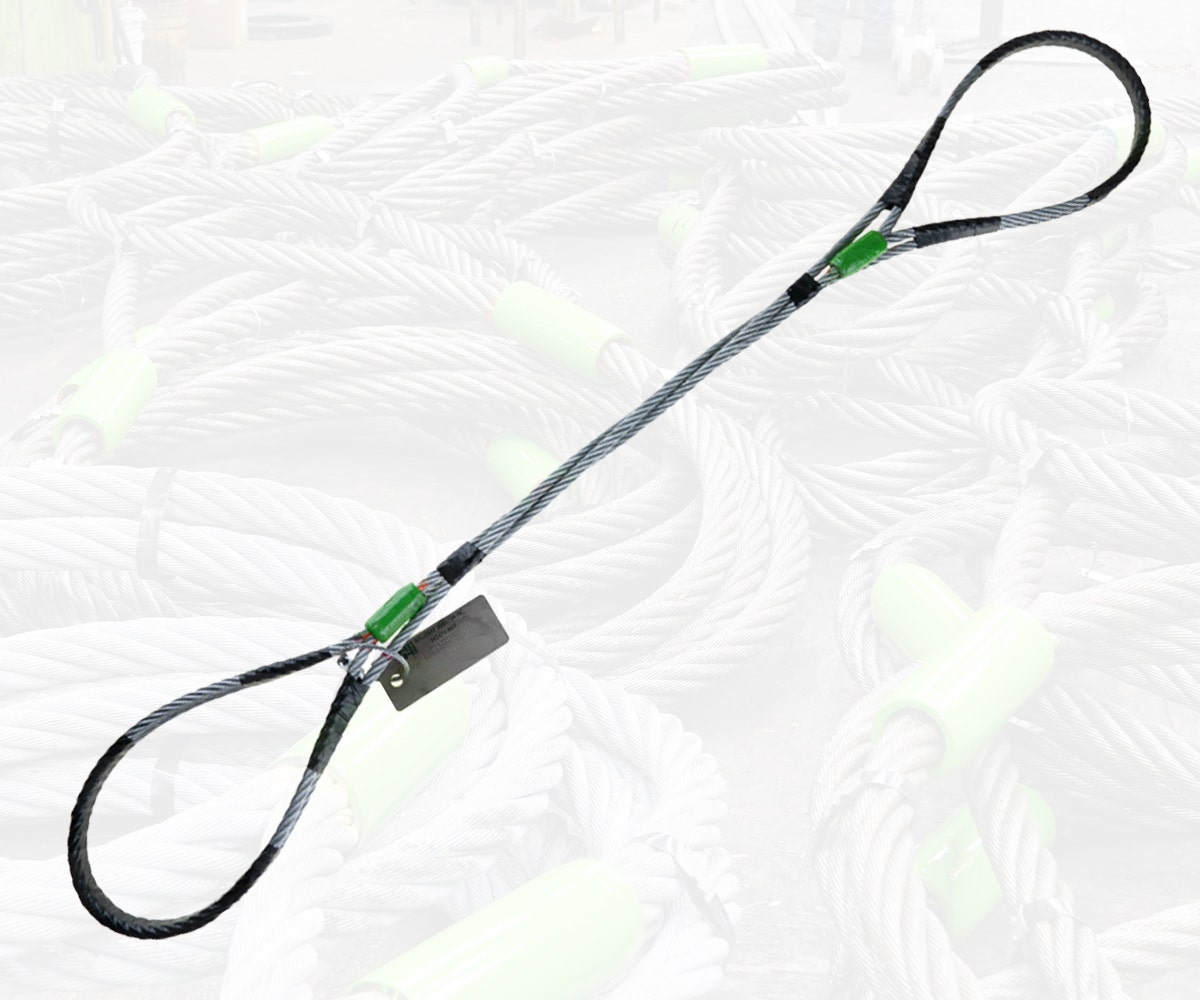
1. Что такое строп из стального каната?
Типичный строп из стального каната состоит из стального каната, изготовленного из небольших отдельных стальных проволок, скрученных вместе. Оба конца стального каната индивидуально запетлены вместе, образуя строп. стальной канат является основным компонентом стропа.
Эти стропы бывают различных размеров, форм и пределов прочности на разрыв. Наиболее распространенными являются те, у которых на обоих концах стропа обжата петля.
Давайте рассмотрим структуру и механику стального каната в следующем пункте.
2. Понимание анатомии стального каната
Типичный сверхпрочный стальной канат имеет множество небольших скрученных прядей, изготовленных из различных марок стали. Конфигурация и количество этих прядей меняются в зависимости от сложности рисунка.
Обычно типичный канат состоит из сотен внешних проволочных прядей, покрывающих сердечник. Все эти пряди движутся как вместе, так и независимо, обеспечивая стальному канату необходимую прочность и гибкость. Механика этого движения довольно сложна.
А. Части стального каната
Типичный стальной канат состоит из следующих трех компонентов:
- Проволоки
Проволока — это самая маленькая часть стального каната. Вы можете использовать различные типы металлов, включая нержавеющую сталь, железо, сталь и бронзу для изготовления проволок. Марка материала, используемого для изготовления проволоки, зависит от прочности, износостойкости и долговечности, необходимых для предполагаемого применения.
- Пряди
Прядь можно создать, плотно скрутив две или более проволоки вместе по точному рисунку. Опять же, рисунок плетения будет определяться конечным применением каната.
- Сердечник
Он изготавливается из стали или натуральных, а иногда и синтетических волокон. Пряди обвивают сердечник, который обеспечивает поддержку, когда канат изгибается или прикрепляется к грузу.
Б. Распространенные рисунки прядей
Как упоминалось, рисунки прядей имеют решающее значение, поскольку они определяют прочность, долговечность и износостойкость каната. Обычно прядь состоит из количества проволок на слой, количества слоев проволок и размера (диаметра) проволок в каждом слое.
Вот несколько наиболее часто используемых рисунков прядей.
- Single Layer
As the name suggests, this type of pattern consists of only one layer of wires around the core, all having the same size or diameter. There are usually six strands covering a core, totaling the number to seven.
- Filler Wires
It comprises two layers of wires wrapped around the core. The inner layer usually has six wires, while the outer layer has twelve with equal diameter. Six filler wires with a smaller diameter are used to fill the gap between the two layers of strands.
- Seale
Like the filler pattern, this one also has two layers of wires surrounding the core. However, wires in the inner layer have a smaller diameter compared to the ones in the outer layer. The outer wires rest in the troughs of inner smaller wires.
- Warrington
This pattern also consists of two layers of wires. However, only the inner layer has wires with a uniform diameter. The ones in the outer layer have two sets of wires, one with a bigger diameter and the other with a smaller one.
In the outer layer, the bigger wires rest in the troughs of the inner layer, while the smaller ones rest on the crests on the wires in the inner layer.
- Combination
In this type of wire rope structure, manufacturers use two or more of any of these patterns to build the rope.
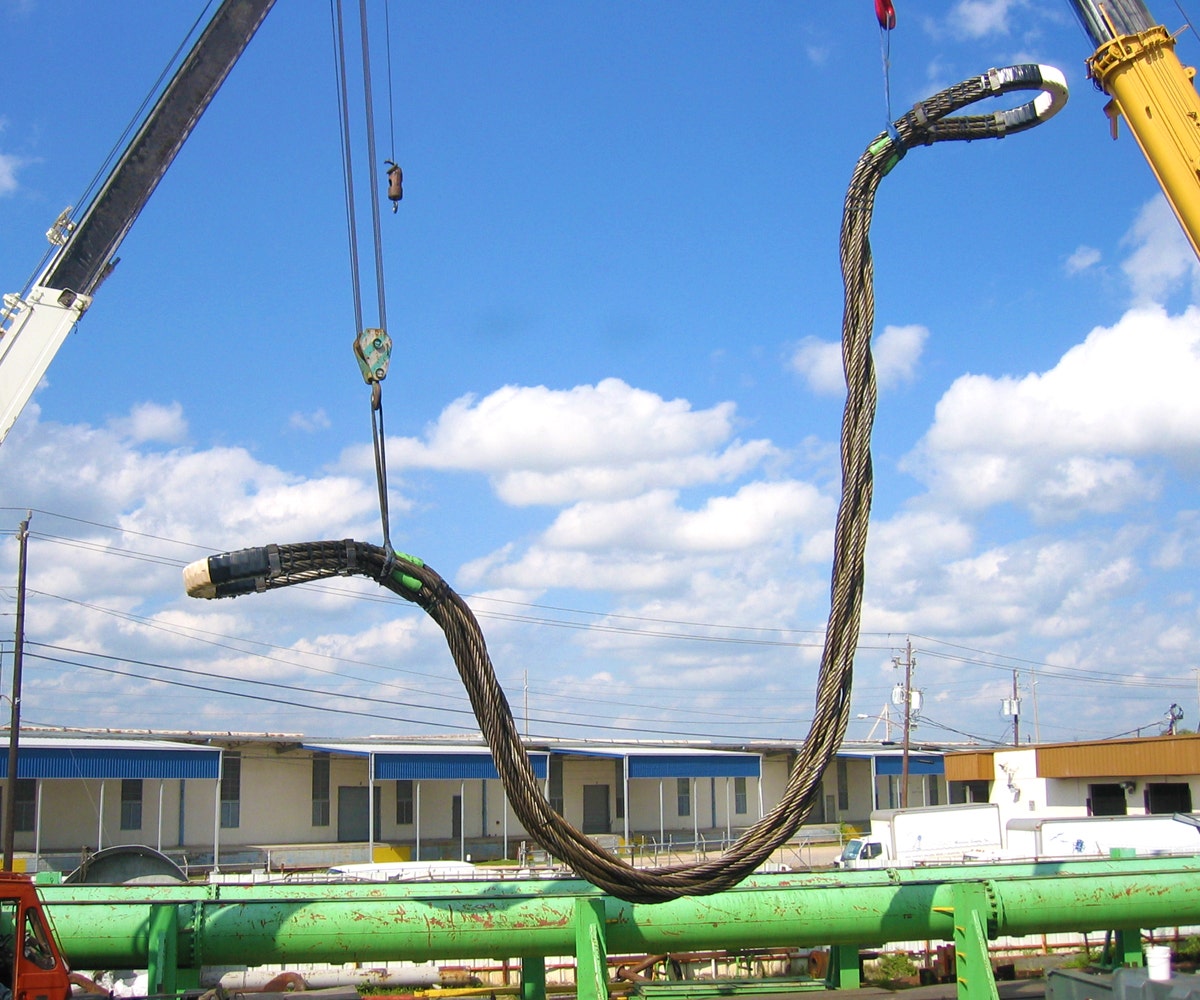
C. Common Layering Patterns
Layering is the next level of structure in a wire rope sling. It is different ways in which:
- You can lay the wires to create strands
- You can lay the strands to create the wire rope
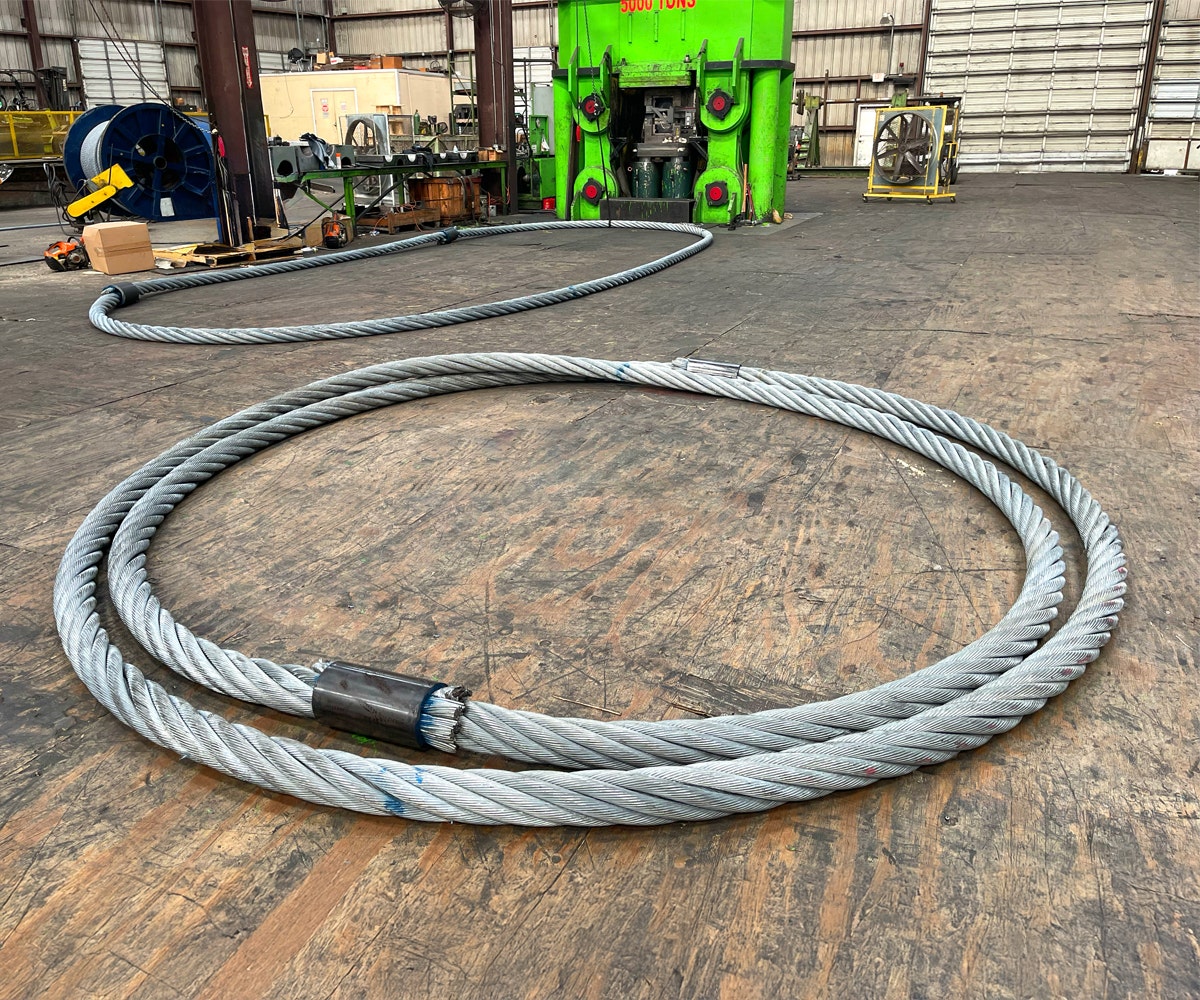
There are three common ways to lay down the wire ropes.
- Regular Layering
This is one of the most common types of layering patterns. In this, the strand layering and the wire layering are in opposite directions. This arrangement provides the wire rope slings with exceptional resistance to crushing forces and offers better spooling.
- Lang Layering
In this type of structure, the wire layering and the core layering are in the same direction. However, the wires form an angle with the rope axis. This arrangement provides a higher resistance to fatigue and abrasion.
- Alternate Layering
In this type of structure, manufacturers use both regular and lag layering in a suitable combination. However, alternate layering is designed for specialized applications only.
3. Common Types of Wire Rope Sling Terminations
Different types of slings are available in the market, depending on the type of end-fittings or loops.
Here are a few common ones.
A. Flemish Eye Splice
This is the most popular wire rope sling. In this type of loop, the spliced end of the rope is tied around the body of канатные стропы using a metal sleeve. The Flemish eye splice is best suited for six-strand ropes.
However, if you are using these loops with other types of wire ropes, you need to use aluminum or loop-back (turn-back) steel sleeves. The regular sleeves often cause an electrochemical reaction, which speeds up the deterioration process.
B. Aluminum Sleeve Loop-Back Splice
In this loop, an aluminum sleeve is pressed using fabrication over both rope parts. The integrity of the pressed sleeve solely determines the strength of these wire rope slings. You can also add thimbles to these slings.
C. Steel Sleeve Loop-Back Splice
This is similar to aluminum sleeve loop-back splice. However, it uses steel sleeves with a slightly smaller diameter. It can also be used for making stainless steel rope slings of a larger rope diameter.
D. Swaged Fittings
The rope gets inserted into the fitting bore, and it then gets swagged onto the rope. With this method, you can attach open and closed sockets, buttons, threaded studs, and load hooks directly to the rope. The process results in a high-efficiency bond.
E. Spelter Sockets
This is a type of socket that is attached to one or both ends of a wire rope to form a sling. The strength of these sockets is the actual rope strength.
Parting Words
As you can see, wire rope slings are a complex piece of lifting device, although they look simple. Hopefully, understanding their structure will help you know how they can offer the required strength, flexibility, and resistance to abrasion, crushing, and fatigue. It will also help you choose the right sling suitable for your application. Do tell us why and how you use these slings in your industry in the comments section.
Доверьтесь Shenli Rigging для ваших решений по подъему
Согласно официальному руководству OSHA по инспекции подъемных ремней, каждые два ремня с цепью должны проверяться на износ, трещины и удлинение перед каждым использованием для обеспечения безопасности оператора.
Как указано в ASME B30.9, цепные стропы с двумя звеньями должны всегда работать в пределах рекомендуемых углов нагрузки, чтобы предотвратить перегрузку и сохранить баланс.